Choosing between ceramic or porcelain tile is one of the first big decisions in any shower remodel. Porcelain is denser and absorbs less water, making it slightly better for shower floors, while ceramic is lighter, easier to cut, and often more budget-friendly for walls. Both look great and have been used for generations, but they behave differently once water, steam, and New England winters get involved.
At Cove Bath, we install both materials in homes across Wellesley, Newton, Brookline, and beyond. Here is what we tell our clients when they ask which one is right.
Frequently Asked Questions
Is porcelain tile worth the extra cost for a shower?
For shower floors, often yes. Its low water absorption and durability suit wet zones well. On walls, ceramic can save money without sacrificing performance.
Can I use ceramic tile on a shower floor?
You can, especially small mosaic ceramic tiles with good grip. Just make sure the tile is rated for floor use and the shower is properly waterproofed.
Which tile is easier to keep clean?
Both clean easily with mild cleaners. Porcelain is slightly more stain-resistant due to its density. Sealed grout is the main thing to maintain with either.
Does tile choice matter in New England’s climate?
Somewhat. Porcelain handles moisture and temperature swings very well. But proper waterproofing behind the tile matters even more for long-term durability.
How do I decide between ceramic or porcelain tile for my home?
Consider your budget, design style, and where the tile will go. A professional designer can match the right material to your bathroom and your goals.
What Is the Quick Answer: Ceramic or Porcelain Tile?
Here is the short version. Porcelain is denser and absorbs less water. That makes it slightly better for shower floors and high-moisture areas. Ceramic is lighter, easier to cut, and often more budget-friendly. It works well on shower walls.
Both are excellent choices. The best pick depends on your budget, your design goals, and where the tile will go. Let’s look closer.
What Makes Them Different?
Ceramic and porcelain are both made from clay and fired in a kiln. The difference comes down to how they are made.
- Porcelain uses denser clay fired at higher temperatures. This creates a harder, less porous tile.
- Ceramic uses a softer clay fired at lower temperatures. It is more porous and a bit easier to work with.
That density gap drives nearly every practical difference between the two.
Water Absorption
This matters most in a shower. Porcelain absorbs very little water. Ceramic absorbs a bit more. For wet zones like shower floors and curbs, lower absorption is a clear advantage.
On vertical walls, where water runs off quickly, ceramic holds up just fine when sealed and grouted properly.
Durability
Porcelain is harder and more resistant to chips and cracks. It stands up better to heavy use. Ceramic is durable too, but it can chip more easily on edges and corners.
If you have a busy family bathroom, porcelain offers extra peace of mind.
Is Ceramic or Porcelain Tile Better for Wet Floors?
For shower floors, we usually lean toward porcelain. Its low water absorption resists moisture well. Many porcelain floor tiles also come with textured or matte finishes that add slip resistance.
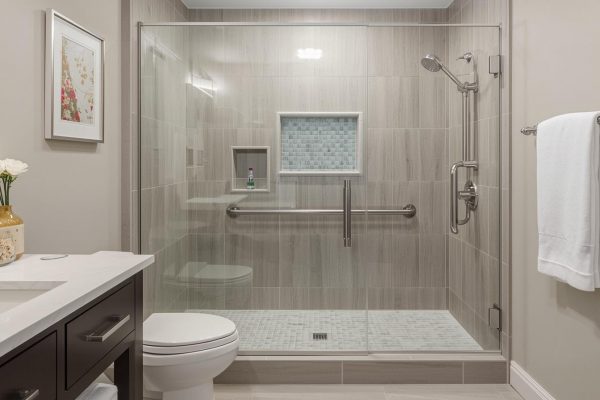
Small mosaic tiles work great on shower floors. The extra grout lines improve grip underfoot. Whether you choose ceramic or porcelain tile here, ask for a slip-rated surface.
For walls, both materials perform well. Larger format tiles mean fewer grout lines, which means less cleaning and a sleek, modern look.
What Should You Know About Cost Considerations?
Budget often shapes the final call. In general, ceramic costs less than porcelain. The price gap comes from porcelain’s denser material and tougher manufacturing process.
But material is only part of the total. Labor, waterproofing, and prep work matter too. Porcelain is harder to cut, so installation can take a bit longer.
A smart approach many homeowners use:
- Porcelain on the shower floor for durability and water resistance.
- Ceramic on the walls to control cost.
- An accent tile to add personality without a big spend.
This blend balances performance and budget nicely. You can learn more about how we plan selections on our how it works page.
What Style and Design Options Are Available?
Both tiles come in nearly endless styles. You will find options that mimic marble, wood, concrete, and natural stone. Color, finish, and size choices are huge.
Porcelain often offers more realistic stone and wood looks. Advanced printing makes the patterns sharp and convincing. Ceramic offers plenty of classic glazed finishes in bright, clean colors.
For Greater Boston homes, design matters. A colonial in Wellesley may call for timeless subway tile. A modern condo in Boston might suit large-format porcelain. We help match the tile to your home’s character.
Grout and Finish
No matter which tile you choose, grout choice is key. The right grout resists stains and moisture. We recommend high-quality, sealed grout in shower areas to keep things watertight.
How Does New England’s Climate Affect Your Shower?
Local conditions matter more than many homeowners expect. Greater Boston winters bring big temperature swings. Bathrooms see steam, then cold drafts, then steam again.
Porcelain’s low water absorption gives it an edge in damp, fluctuating conditions. It resists moisture-related wear over time. That said, a well-built ceramic shower with proper waterproofing also lasts for years.
The real secret is what goes behind the tile. A waterproof membrane and correct slope protect your walls and floor from hidden moisture. Quality installation matters more than the tile brand alone.
What Do You Need to Know About Maintenance and Cleaning?
Both tiles are easy to clean. A simple wipe-down and mild cleaner keeps them looking fresh. Avoid harsh abrasives that can dull glazed finishes.
Porcelain’s density makes it slightly more stain-resistant. Ceramic glazes resist stains well too. In both cases, sealed grout is the part that needs the most attention over time.
Quick maintenance tips:
- Squeegee glass and tile after showers to cut down on water spots.
- Run the bathroom fan to reduce steam and mildew.
- Reseal grout periodically to keep it watertight.
So, Which Should You Choose?
There is no single right answer. Think about how you use the space and what matters most to you.
- Choose porcelain if you want top durability, low water absorption, and realistic stone or wood looks.
- Choose ceramic if you want a budget-friendly option with classic style for shower walls.
- Blend both to get the strengths of each where they matter most.
A good design team helps you weigh these trade-offs. We guide our clients through curated selections so the choice feels clear, not overwhelming. See our full bathroom remodeling services to learn more.
Ready to Plan Your New Shower?
The right tile turns a basic shower into a space you love. Whether you lean toward porcelain, ceramic, or a smart mix of both, the details make all the difference.
Cove Bath helps Greater Boston homeowners design beautiful, durable showers with fixed pricing and quick timelines. We handle the selections, the permits, and the installation so you do not have to. Contact us today to request a free consultation and start planning your new bathroom.
Cove Bath designs and builds bathrooms across Greater Boston. Explore our bathroom remodeling in Boston services, or request a free consultation.