Multigenerational Bathroom Remodel: Designing for the Whole Family
Multigenerational living is growing across Greater Boston, and it is not hard to understand why. Housing costs in the suburbs make it more practical for families to share a home than to maintain two separate households. Adult children are moving back home. Aging parents are moving in with their kids. Families are combining households to save money, share caregiving, and stay close.
When a household expands to include grandparents, adult children, or extended family, the bathroom is one of the first pressure points. A single shared bathroom that worked for a couple may not work for a household of five. A second-floor-only bathroom becomes a barrier for a parent with mobility issues. And everyone in the house deserves a bathroom experience that respects their privacy, safety, and comfort.
This guide covers how to approach a bathroom remodel for a multigenerational household — what to prioritize, how to balance competing needs, and design strategies that work for everyone under one roof.
Why Multigenerational Bathrooms Are Different
A standard bathroom remodel focuses on the preferences of one or two people. A multigenerational remodel needs to serve users who may have very different physical capabilities, daily routines, and expectations of privacy.
Consider a typical scenario in a Greater Boston suburb: a couple in their 40s with a teenager and the wife’s 75-year-old mother, who recently moved in after a fall at her own home. The teenager needs the bathroom for 30 minutes every morning before school. The grandmother needs a safe, accessible shower she can use independently. The parents want a bathroom that feels modern and comfortable, not clinical.
Designing for all three generations at once requires thinking about accessibility, privacy, and daily logistics simultaneously.
Universal Design: Features That Work for Everyone
The best multigenerational bathroom designs use universal design principles — features that improve the bathroom for every user, regardless of age or ability, without looking like a medical installation.
Curbless shower entry
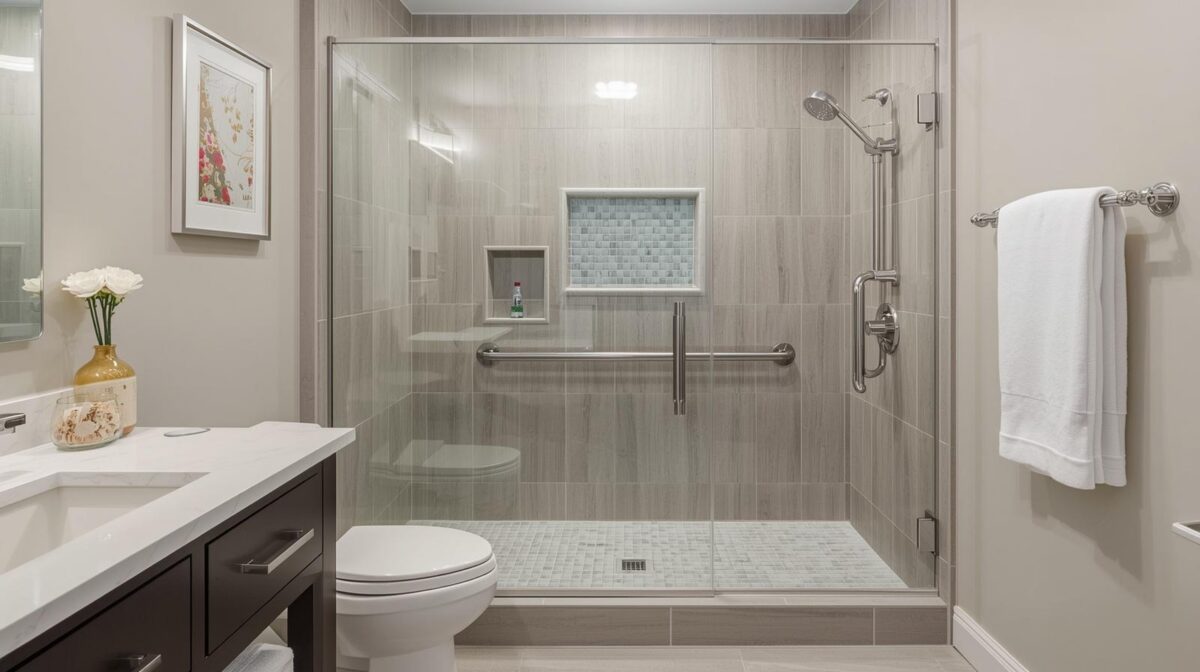
A curbless (zero-threshold) shower is the single most impactful feature in a multigenerational bathroom. It eliminates the step-over that causes falls for older adults, makes the bathroom accessible if someone ever needs a wheelchair or walker, and looks clean and modern for everyone else.
Curbless showers are not just an accessibility feature — they are a design feature. They are standard in luxury hotels and high-end homes precisely because they create a seamless, open look.
Grab bars that double as towel bars
Modern grab bars do not look like what you remember from a hospital. Companies like Moen, Delta, and Kohler make grab bars that are visually indistinguishable from standard towel bars and shelf bars. Install them in the shower, next to the toilet, and near the tub (if you keep one), and every family member benefits from the added support — even the teenager stepping out of a wet shower.
Handheld showerhead on a slide bar
A slide bar allows the showerhead height to adjust from about 40 inches (seated) to 80 inches (standing). This accommodates a 5-foot grandmother using a shower chair, a 6-foot teenager standing, and everyone in between. Pair it with a rain showerhead mounted overhead, and the shower works for any user.
Comfort-height toilet
A toilet with a 17-to-19-inch seat height (versus the standard 15 inches) is easier for older adults to sit on and stand from. It is also more comfortable for taller adults. There is no downside to specifying comfort height in a multigenerational bathroom.
Lever-handle faucets and fixtures
Round knobs require grip strength and twisting motion that can be difficult for arthritic hands. Lever handles operate with a simple push and are easier for everyone, including children. This applies to faucets, shower valves, and door handles.
Non-slip flooring
Textured tile or matte-finish porcelain provides traction when wet without looking institutional. Avoid polished tile on bathroom floors, especially in households with older adults. The small mosaics commonly used on shower floors (penny tile, hexagon tile) also provide excellent grip because the extensive grout lines create a textured surface.
Privacy and Logistics
Adding a second bathroom
If the home currently has one full bathroom and multiple generations need access, adding a second bathroom is often the best investment. In Greater Boston’s colonials and Cape Cods, common conversion locations include:
- A first-floor closet or laundry area (ideal for a parent who cannot easily use stairs)
- An underutilized den or study on the first floor
- A basement with an existing rough-in for a half bath
Adding a bathroom is a larger project than remodeling an existing one, but for multigenerational households, it can be transformative. A first-floor half bath or three-quarter bath gives an aging parent independence and takes pressure off the shared bathroom upstairs.
Separating wet and dry zones
In larger bathrooms, separating the shower and toilet from the vanity area allows two people to use the bathroom simultaneously. One person can shower while another is at the vanity. A pocket door or partial wall between zones provides privacy without requiring separate rooms.
A lock is not a luxury
This sounds obvious, but in multigenerational homes, bathroom privacy is essential. Make sure every bathroom has a functioning lock — and if older adults are using the bathroom alone, consider a lock that can be opened from the outside in an emergency (a simple privacy lock with a coin-slot override).
Design That Does Not Feel Clinical
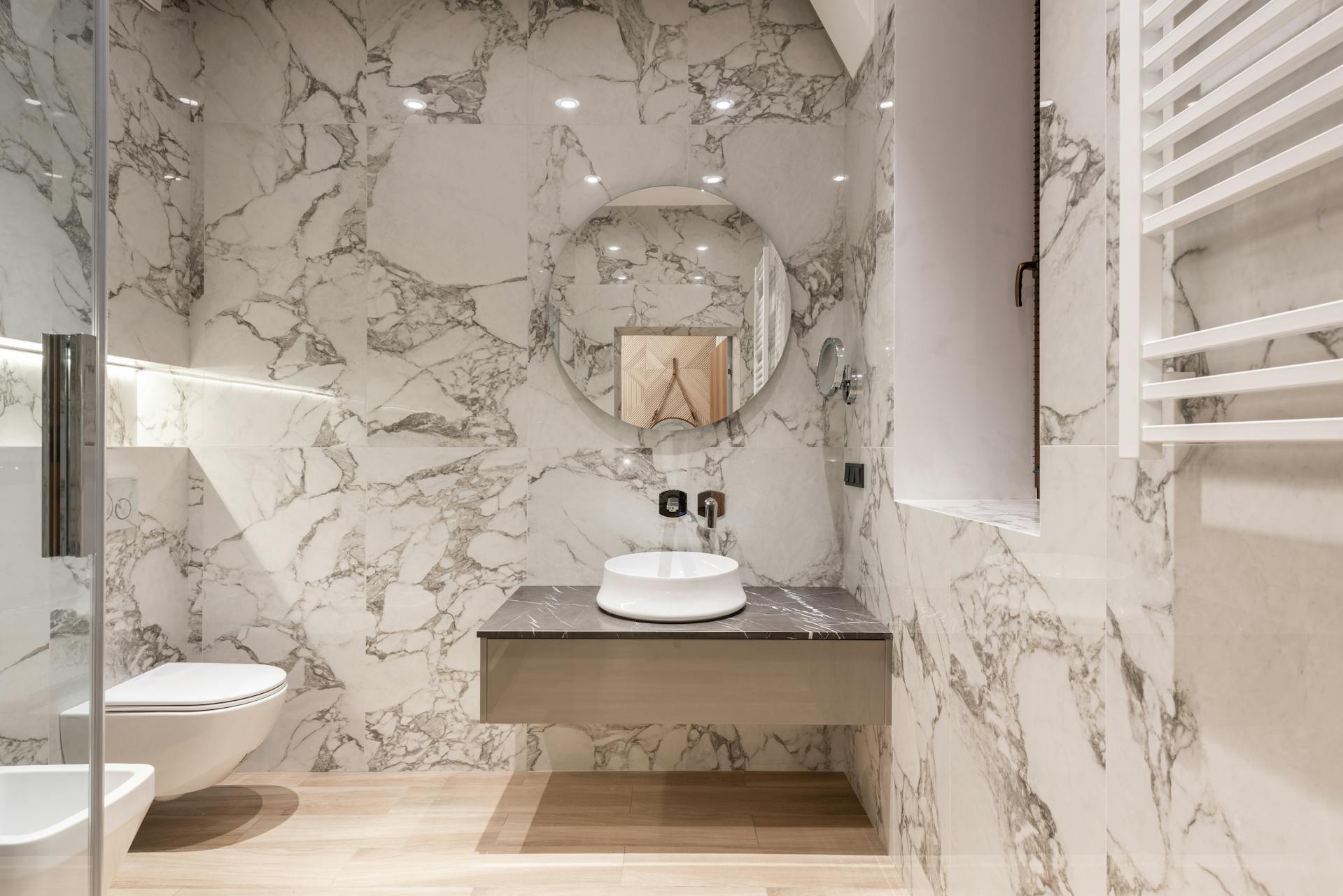
One of the biggest concerns families express about multigenerational bathroom design is that accessibility features will make the bathroom look and feel like a medical facility. This is a valid concern from a decade ago, but it is no longer accurate.
Modern accessible design is indistinguishable from modern luxury design. A curbless shower with large-format porcelain tile looks like a high-end hotel bathroom, not a hospital. Grab bars finished in matte black or brushed nickel match the rest of the hardware. A teak shower bench adds warmth and a spa-like feel while providing seating for anyone who needs it.
The key is integrating accessibility from the start of the design, not bolting it on as an afterthought. When grab bars, shower seats, and curbless entries are part of the original plan, they feel intentional and cohesive.
Cost and Timeline
A multigenerational bathroom remodel in the Greater Boston area falls within the same general cost range as any full bathroom renovation, with the specific cost depending on scope and features:
At Cove Bath, our fixed-price tiers — $30,000, and $40,000 — cover complete bathroom remodels including accessibility features. A curbless shower, grab bars, a comfort-height toilet, and universal design features are part of the design conversation, not expensive add-ons.
Our projects are completed in one to two weeks. For multigenerational households, speed matters. When a parent moves in after a health event, you need the bathroom ready as quickly as possible — not in two months.
Thinking Ahead
Even if your household is not multigenerational today, incorporating universal design features during a remodel is smart planning. The cost to add a curbless shower entry, blocking for future grab bars, and a comfort-height toilet during a remodel is minimal. Retrofitting these features later is far more expensive.
If your home may need to accommodate aging parents, returning adult children, or your own changing needs in the next 10 to 20 years, building those features in now is one of the most practical investments you can make.
Get Started
If your family is growing or changing and your bathroom needs to keep up, take our 2-minute quiz for an instant estimate. Or book a virtual consultation to discuss your household’s specific needs — we will help you design a bathroom that works for everyone.
Cove Bath is a bathroom remodeling company based in Wellesley, MA, serving homeowners across Greater Boston. We offer fixed-price bathroom renovations with virtual consultations and one-to-two-week project timelines.