Are Fixed-Price Bathroom Remodels Worth It?
For most homeowners, a fixed-price bathroom remodel is worth it — packages typically range from $25,000 to $40,000 and guarantee you pay exactly what was quoted, even if unexpected issues arise behind the walls.
Some contractors give you a single number. Others hand you an hourly rate and a materials estimate. A few present a cost-plus arrangement where you pay for everything at cost, plus a markup.
Which approach actually protects your budget? And when does a fixed-price bathroom remodel make the most sense?
This guide breaks down the three most common pricing models so you can make an informed decision before signing anything.
Frequently Asked Questions
What is a fixed-price bathroom remodel?
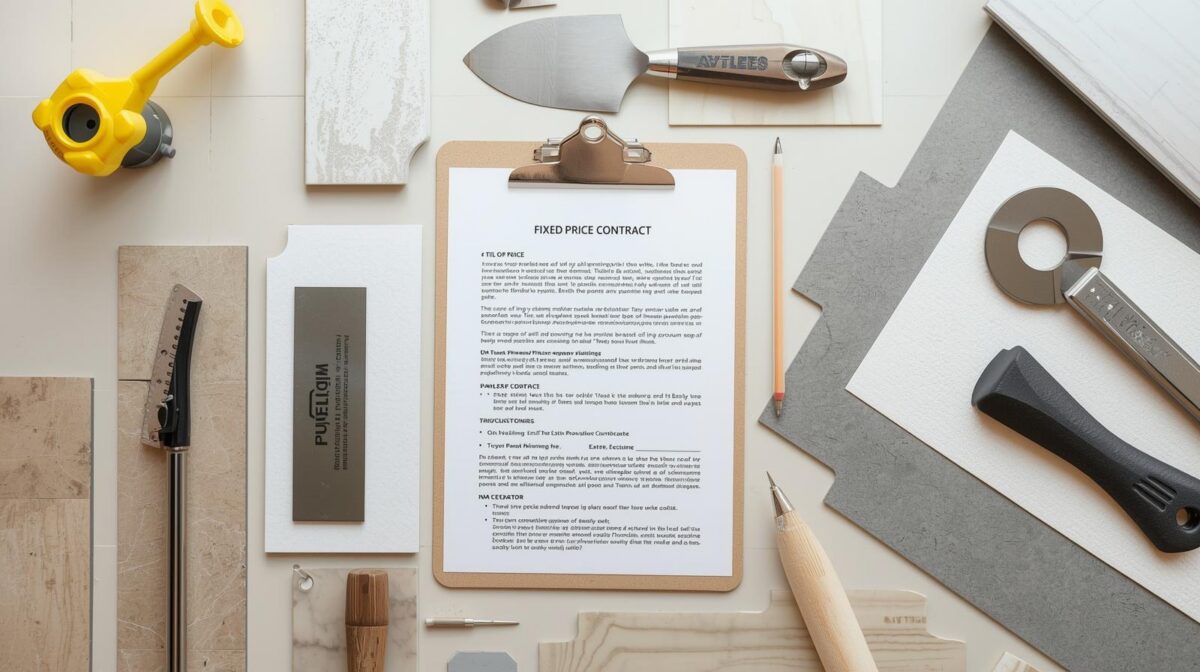
With a fixed-price contract, the contractor provides a single guaranteed price for a clearly defined scope of work. You agree on exactly what will be done, what materials will be used, and what the total cost will be before construction begins. If the project costs more than expected to complete, the contractor absorbs the difference.
How much does a fixed-price bathroom remodel cost?
At Cove Bath, fixed-price bathroom remodels are offered at three tiers: $25,000 for straightforward updates in standard-sized bathrooms, $30,000 for full remodels with premium fixtures, and $40,000 for larger bathrooms or luxury finishes and features.
What is the difference between fixed-price, time-and-materials, and cost-plus contracts?
A fixed-price contract locks in one total number before work begins. A time-and-materials contract bills you for hours worked plus actual material costs, so the final total is unknown until the project is done. A cost-plus contract charges you the actual cost of all labor and materials plus a markup percentage, giving you full transparency but no guaranteed total.
Who benefits most from a fixed-price bathroom remodel?
Fixed-price contracts are especially valuable for homeowners in older homes built before 1970, first-time remodelers who lack experience evaluating contractor hours, and anyone who prioritizes budget certainty over mid-project flexibility.
Are there situations where time-and-materials or cost-plus makes more sense?
Yes. If you are renovating a historic property where the full scope cannot be determined in advance, or if you want full visibility into every dollar and enjoy managing budgets, open-ended pricing can make sense. For very small jobs like a single fixture swap, an hourly rate may also be simpler than a fixed-price contract.
How do I find out my fixed price with Cove Bath?
You can take the Cove Bath quiz to get an instant fixed price based on your bathroom’s specifics. It takes about two minutes and there is no obligation. If you like what you see, you can book a free virtual consultation to finalize the details.
What Are the Three Pricing Models?

Fixed-Price (Lump Sum) Contracts
With a fixed-price contract, the contractor provides a single guaranteed price for a clearly defined scope of work. You agree on exactly what will be done, what materials will be used, and what the total cost will be before construction begins.
How it works: The contractor assesses the project, accounts for labor, materials, permits, and profit margin, then quotes one number. If the project costs more than expected to complete, the contractor absorbs the difference. If it comes in under budget, the contractor keeps the savings.
Example: Your contractor quotes $30,000 for a full bathroom remodel including demolition, plumbing, tile, vanity, fixtures, and cleanup. That is what you pay, whether the project takes eight days or twelve.
Time-and-Materials (T&M) Contracts
Under a time-and-materials agreement, you pay for the contractor’s hours worked plus the actual cost of materials. The contractor sets an hourly or daily labor rate, and you are billed based on how long the work takes and what supplies are purchased.
How it works: The contractor estimates a range (say, $35,000) based on their experience with similar projects. You receive invoices as work progresses, with detailed breakdowns of hours and receipts for materials.
Example: Your contractor bills $28,400 — or $33,600, depending on what they find behind your walls.
Cost-Plus Contracts
Cost-plus is similar to time-and-materials, but the markup structure is different. You pay the actual cost of all labor and materials, plus a fixed percentage (typically 10 to 20 percent) or a flat management fee on top.
How it works: You see every invoice and receipt. The contractor adds their agreed-upon margin to each one. Your total cost is fully transparent but completely open-ended.
Example: Materials and subcontractor labor total $25,300 — plus their own labor hours billed separately.
How Do the Three Models Compare?
Budget certainty
- Fixed-price: High. You know the exact number before work begins.
- T&M: Low. The final cost is unknown until the project is complete.
- Cost-plus: Low. You see where money goes, but the total is unpredictable.
Risk allocation
- Fixed-price: The contractor carries the risk of cost overruns.
- T&M: The homeowner carries the risk. If the project takes longer, you pay more.
- Cost-plus: The homeowner carries the risk, with full visibility into costs.
Flexibility for changes
- Fixed-price: Limited. Changes require formal change orders with new pricing.
- T&M: High. Easy to adjust scope on the fly.
- Cost-plus: High. Same flexibility as T&M.
Ease of comparing quotes
- Fixed-price: Easy. You can compare apples to apples across contractors.
- T&M: Difficult. Different hourly rates and efficiency levels make comparison nearly impossible.
- Cost-plus: Moderate. You can compare markup percentages, but total cost remains unclear.
When Does Fixed-Price Make the Most Sense?
Fixed-price contracts are not the right fit for every construction project. But for bathroom remodeling specifically, they tend to be the strongest choice for homeowners. Here is why.
The scope is well-defined
A bathroom remodel has a clear beginning and end. You are working within four walls, with a known set of fixtures, finishes, and systems. This is not a sprawling addition or a gut renovation of an entire floor. The scope can be nailed down precisely during the design phase, which is exactly the condition where fixed pricing works best.
Older homes benefit the most
If you live in a home built before 1970 — as many homeowners in Greater Boston communities like Wellesley, Needham, Natick, and Brookline do — there is a higher likelihood of hidden issues. Outdated plumbing, water damage, lead paint, and non-standard framing are common.
Under a T&M or cost-plus contract, every one of those surprises increases your bill. Under a fixed-price contract, the contractor has already factored in a contingency for the unexpected. You do not pay more when they discover galvanized pipes behind the tile.
First-time remodelers need predictability
If you have never been through a remodel before, a time-and-materials contract can feel like handing over a blank check. You do not have the experience to evaluate whether 40 hours of tile work is reasonable or excessive. Fixed pricing removes that burden entirely.
It forces better planning
Contractors who offer fixed pricing must do thorough assessments upfront. They cannot afford to underbid and make up the difference with change orders. This typically results in better project planning, clearer timelines, and fewer mid-project surprises for the homeowner.
When Might T&M or Cost-Plus Make Sense?
To be fair, there are situations where open-ended pricing structures work well.
- Highly uncertain scope: If you are renovating a historic property where the full extent of work genuinely cannot be determined in advance, T&M gives the contractor flexibility to address issues without constant renegotiation.
- You want to be deeply involved: Cost-plus gives you full visibility into every dollar. If you enjoy managing budgets and reviewing invoices, this model lets you stay hands-on.
- The project is very small: For minor repairs or a single fixture swap, the overhead of a fixed-price contract may not make sense. An hourly rate for a half-day job is simpler.
However, for a full bathroom remodel in the $50,000 range, most industry professionals agree that fixed-price contracts are the standard for good reason.
What Is the Hidden Cost of “Affordable” Estimates?

One pattern that catches homeowners off guard: the lowball T&M estimate.
A contractor quotes $30,000 fixed. The first number looks far more attractive. But the T&M estimate is just that — an estimate, not a commitment. If the project takes 30 percent longer than projected, or if material prices increase, or if they hit unexpected plumbing issues, your $26,000 or more.
The fixed-price quote of $30,000 might have seemed expensive at first. But it included contingency for surprises, and the final invoice matched the original quote to the penny.
When you are comparing quotes, make sure you are comparing commitments, not projections.
How Does Cove Bath’s Fixed-Price Model Work?
At Cove Bath, we believe bathroom remodeling should not involve financial guesswork. That is why we offer three clearly defined pricing tiers for complete bathroom remodels:
- $25,000 — Ideal for straightforward updates in standard-sized bathrooms
- $30,000 — Our most popular tier, covering full remodels with premium fixtures
- $40,000 — For larger bathrooms or luxury finishes and features
Every package includes demolition, plumbing, electrical, tile installation, vanity installation, lighting, fixtures, and cleanup. The price you see is the price you pay.
Our 7-step process starts with an online quiz and ends with a final walkthrough, typically within one to two weeks of construction. No open-ended invoices. No hourly billing. No surprises behind the walls that land on your bill.
You can learn more about our team and approach or browse completed projects to see what fixed-price remodeling looks like in practice.
What Is the Bottom Line?
Fixed-price bathroom remodels are worth it for most homeowners — especially those in older homes, those remodeling for the first time, and anyone who values budget certainty over mid-project flexibility. You give up the ability to make freewheeling changes during construction, but you gain something more valuable: knowing exactly what your remodel will cost before the first tile is removed.
How Do You Find Out Your Fixed Price?
Curious what your bathroom remodel would cost? Take the Cove Bath quiz to get an instant fixed price based on your bathroom’s specifics. It takes about two minutes, and there is no obligation. If you like what you see, you can book a free virtual consultation to finalize the details.