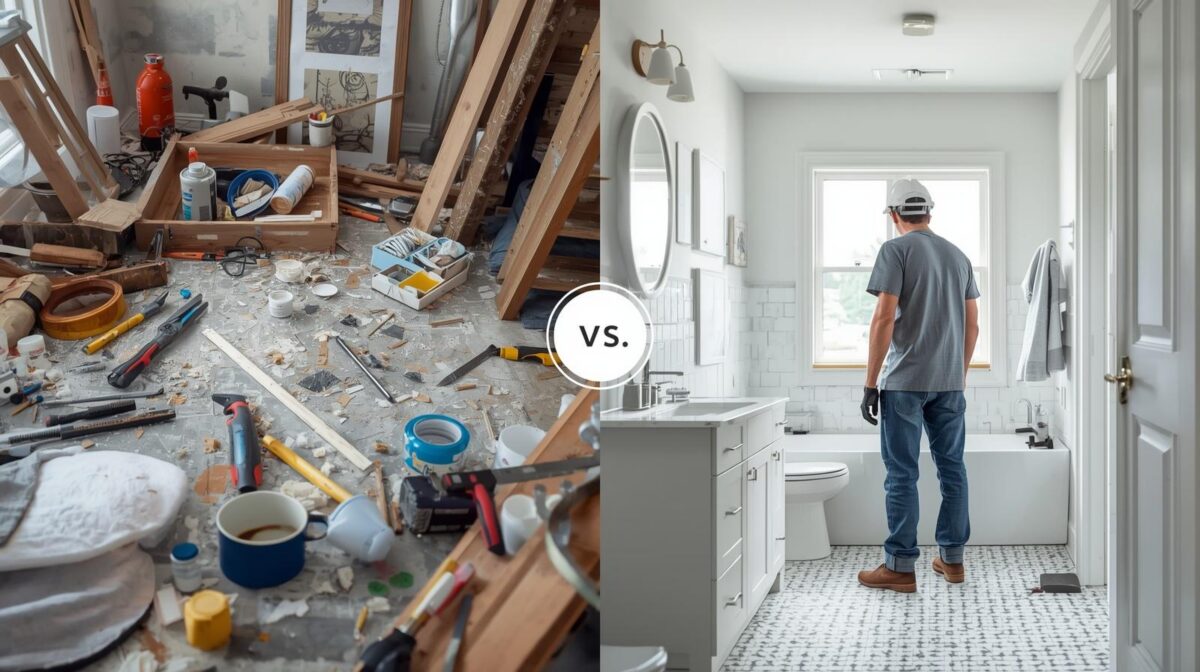
DIY vs. Professional Bathroom Remodel: When to Hire a Pro
The idea of saving thousands of dollars by doing your own bathroom remodel is appealing — and for cosmetic tasks, DIY can realistically save up to $2,000. But a full bathroom remodel in Massachusetts typically costs $275 per square foot professionally, and DIY savings on that scope are often only 15 to 25 percent once licensed trades, permits, and materials are factored in.
Knowing which tasks you can handle and which ones require a professional is the key to saving money without creating costly problems. This guide draws a clear line between the two, with specific attention to what Massachusetts law requires.
Frequently Asked Questions
Can I do my own plumbing work in Massachusetts?
No. Any work that involves moving, adding, or replacing supply lines, drain lines, or vent pipes requires a licensed plumber in Massachusetts. Homeowners cannot pull their own plumbing permits.
Can I do my own electrical work in a Massachusetts bathroom?
Not for most tasks. Under the Code of Massachusetts Regulations Title 248, only a licensed master or journeyman electrician can perform electrical work and obtain electrical permits in the state. Replacing an existing fixture at the same location using existing wiring is manageable for a comfortable DIYer, but any new wiring, circuits, or panel changes require a licensed electrician.
How much can I really save by doing a bathroom remodel myself?
Less than most people expect. A professional bathroom remodel in the Greater Boston area typically costs $275 per square foot. Materials alone cost about $100 per square foot, and licensed plumbing and electrical work are required regardless. After accounting for required professional labor, permits, tool rentals, and a realistic allowance for mistakes, actual DIY savings on a full remodel are often only 15 to 25 percent — not the 50 percent many homeowners expect.
What DIY bathroom tasks genuinely save money?
Painting, replacing hardware and accessories, updating mirrors, installing simple shelving, replacing a toilet seat, and swapping out light fixtures (in the same location with existing wiring) are all legitimate DIY tasks that carry low risk and real savings.
What happens if I skip permits on a bathroom remodel?
Work done without permits can create serious problems when you sell your home. Home inspectors and buyers’ attorneys routinely check for permitted work, and unpermitted renovations can delay or derail a sale. In some cases, you may be required to open up walls so an inspector can verify the work, adding significant cost after the fact.
How long does a professional bathroom remodel take versus DIY?
A professional team typically completes a full bathroom remodel in one to two weeks. A DIY remodel of the same scope routinely takes two to three months of nights and weekends, during which you have a non-functional bathroom in your home.
What Can You Realistically DIY?
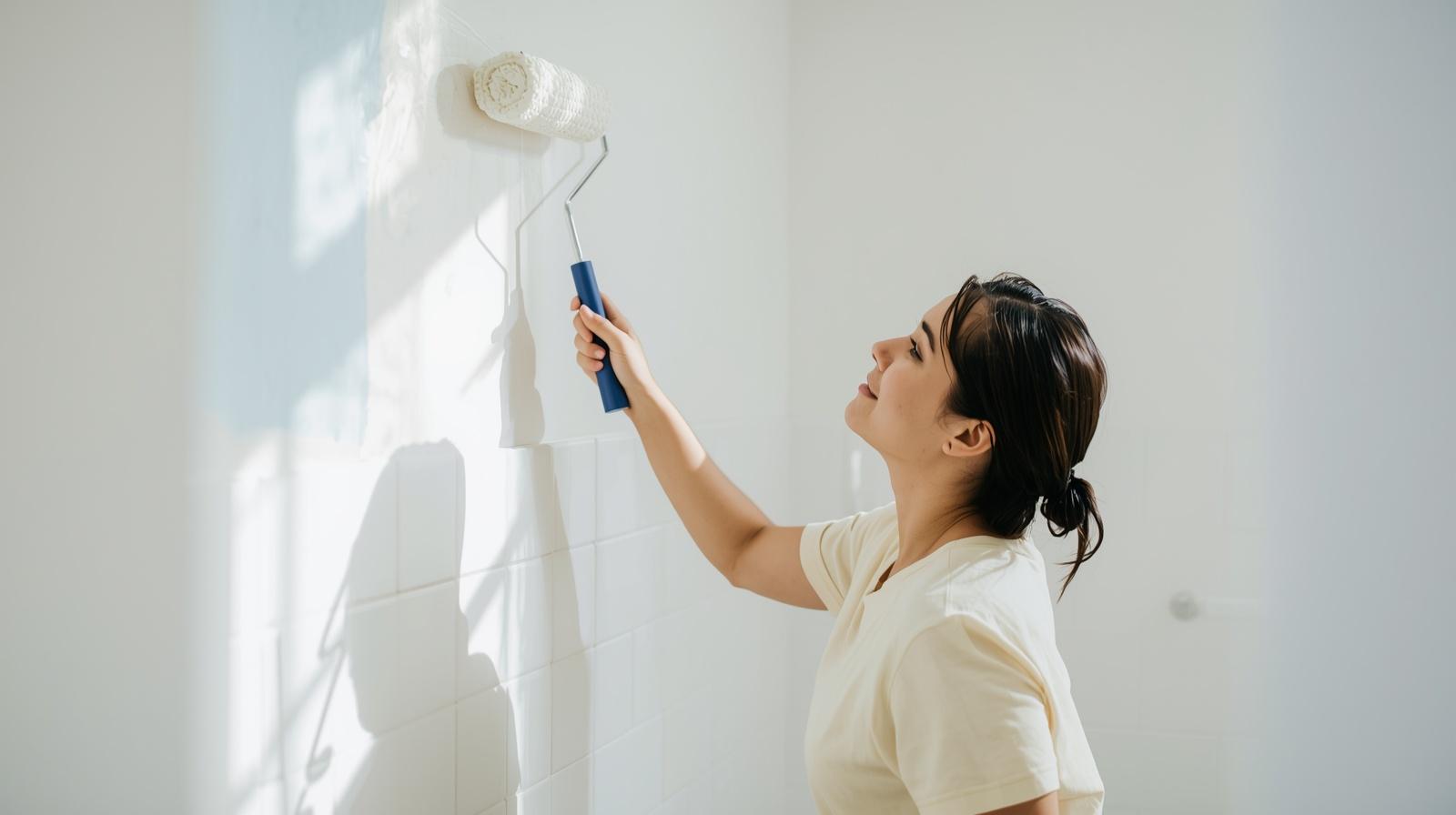
There are meaningful ways to update your bathroom yourself. These tasks do not require specialized licenses, do not risk structural or water damage, and can genuinely save you money.
Painting
Painting bathroom walls and ceilings is straightforward DIY work. Use a high-quality paint rated for bathrooms (look for mildew-resistant formulas) and make sure the room is properly ventilated during and after painting. Prep work matters: clean the walls, patch any holes, and use painter’s tape for clean edges. A fresh coat of paint is one of the highest-impact, lowest-cost updates you can make.
Replacing Hardware and Accessories
Swapping out cabinet knobs, drawer pulls, towel bars, toilet paper holders, and robe hooks requires only basic tools and a few minutes per item. This is an easy way to modernize the look of your bathroom without any construction work.
Updating the Mirror
Removing an old mirror and hanging a new one (or adding a frame to an existing builder-grade mirror) is a simple DIY project that can significantly change the feel of the room.
Installing Simple Shelving
Adding open shelving, over-the-toilet storage units, or small organizational accessories is well within DIY territory. Just make sure you are anchoring into studs for anything that will hold weight.
Replacing the Toilet Seat
This is a five-minute job with no tools beyond a wrench. Upgrading to a soft-close seat is an inexpensive improvement.
Swapping Out Light Fixtures (With a Caveat)
If you are replacing a light fixture in the same location using the existing wiring and junction box, this is a manageable DIY task for someone comfortable with basic electrical work. However, if you need to run new wiring or add a new circuit, you need a licensed electrician in Massachusetts.
What Requires a Professional?
These tasks involve licensed trades, building code compliance, or specialized skills where mistakes create expensive problems.
Plumbing Work
Any work that involves moving, adding, or replacing supply lines, drain lines, or vent pipes requires a licensed plumber in Massachusetts. This includes moving a sink or toilet to a new location, replacing a bathtub, installing a new shower, or converting a tub to a walk-in shower.
Even seemingly simple tasks like replacing a faucet can become complex if the supply lines or valves need updating. If anything goes wrong with plumbing connections inside a wall, the resulting water damage can cost thousands to repair.
Electrical Work
Massachusetts requires a licensed electrician for any new wiring, new circuits, or changes to your electrical panel. Adding recessed bathroom lighting, installing a new exhaust fan, adding GFCI outlets, or rewiring for a heated floor system all require a licensed professional who can pull the proper permits.
This is not optional. Under the Code of Massachusetts Regulations Title 248, only a licensed master or journeyman electrician can perform electrical work and obtain electrical permits in the state.
Waterproofing
Proper waterproofing is arguably the single most critical element of any bathroom remodel, and it is where DIY mistakes cause the most damage. The shower pan, walls behind tile in the wet zone, and the transition between the shower and bathroom floor all require a continuous waterproof membrane that is installed correctly and without gaps.
Improper waterproofing leads to water infiltrating the wall cavity and subfloor. The damage often goes undetected for months or years, silently causing mold growth, wood rot, and structural deterioration. By the time you notice the problem, the repair costs can easily exceed the entire cost of having the job done right in the first place.
Tile Installation
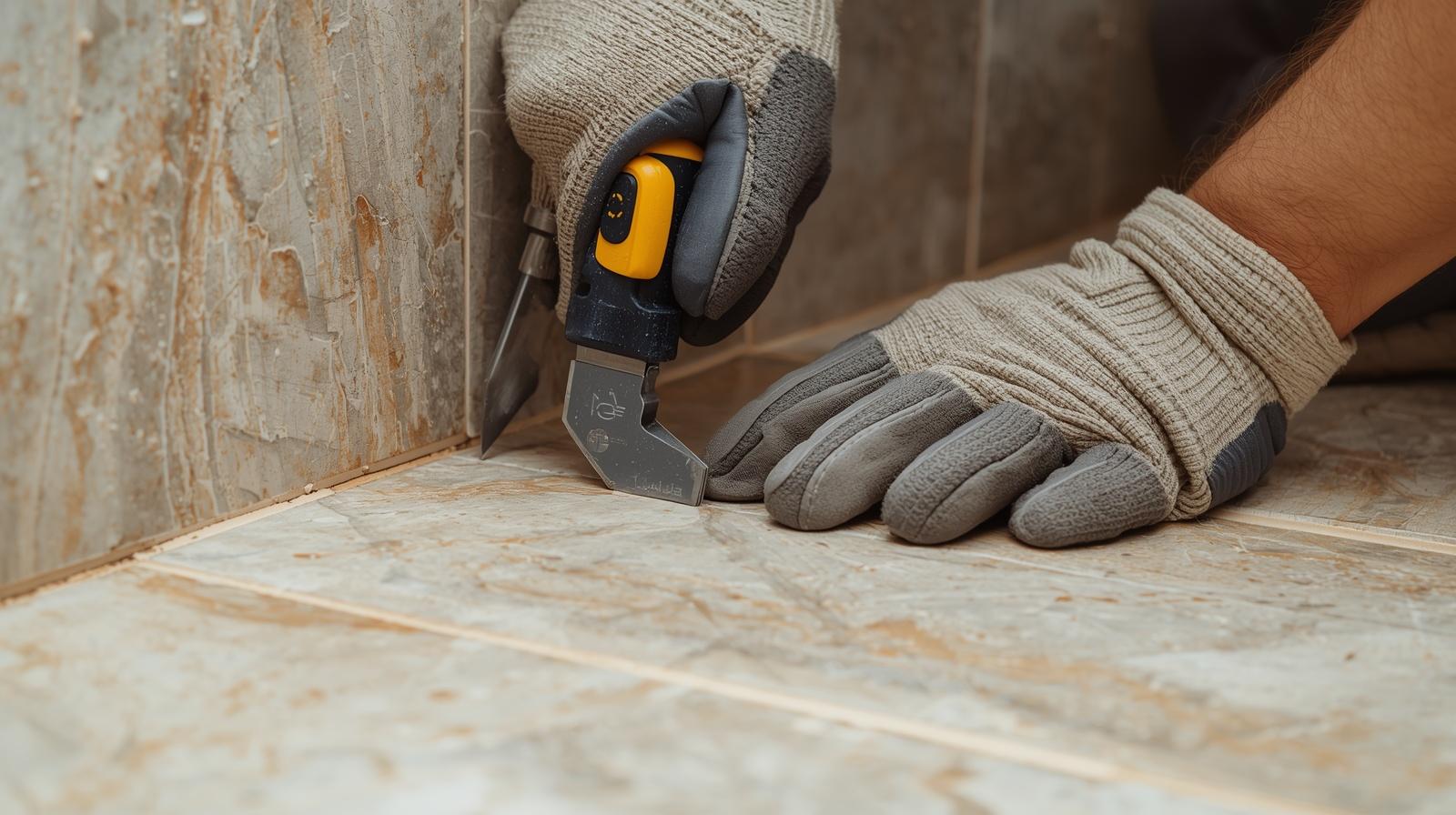
While technically possible to DIY, tile installation in a bathroom is far more demanding than it appears. It requires a perfectly level substrate, proper thin-set application, precise cuts around fixtures and corners, consistent grout lines, and correct grout and sealant application. In a shower, tile work must integrate with the waterproofing system flawlessly.
Professional tile installers have years of experience handling the details that make the difference between tile work that lasts 20 years and tile work that starts cracking or leaking within a few years. For shower tile in particular, the stakes are too high for trial and error.
Structural Modifications
Removing or modifying walls, changing the bathroom layout, or reinforcing the subfloor for heavy fixtures (like a freestanding tub) requires professional assessment and execution. Load-bearing walls must be properly supported, and subfloor reinforcement must meet structural requirements.
What Are the Massachusetts Permit Requirements?
Massachusetts has some of the strictest building, plumbing, and electrical codes in the country. Understanding what requires a permit is essential before starting any bathroom project.
Plumbing permits: Required for any plumbing work beyond minor repairs like fixing a leaky faucet or clearing a blocked drain. Only a licensed master or journeyman plumber can pull a plumbing permit in Massachusetts. Homeowners cannot pull their own plumbing permits.
Electrical permits: Required for any new wiring, new circuits, new outlets, or changes to the electrical system. Only a licensed master or journeyman electrician can pull an electrical permit. As with plumbing, homeowners cannot pull their own electrical permits in Massachusetts.
Building permits: Required for structural changes, layout modifications, and in some municipalities, for any renovation above a certain dollar threshold. Requirements vary by town, but communities like Wellesley, Newton, Brookline, and Needham all have active building departments that enforce permitting requirements.
The consequence of skipping permits: Work done without permits can create serious problems when you sell your home. Home inspectors and buyers’ attorneys routinely check for permitted work, and unpermitted renovations can delay or derail a sale. In some cases, you may be required to open up walls so an inspector can verify the work, adding significant cost after the fact.
What Does the True Cost Comparison Between DIY and Professional Look Like?
On paper, DIY saves money. In practice, the savings are smaller than most people expect, and the risks are real.
Where DIY Actually Saves Money
For cosmetic updates like paint, hardware, accessories, and mirrors, DIY savings are genuine. You avoid labor charges for simple tasks, and the risk of costly mistakes is low. On these items, you can realistically save $2,000 depending on the scope.
Where DIY Savings Disappear
For a full bathroom remodel involving plumbing, electrical, tile, and waterproofing, the math changes dramatically.
Licensed trades are required anyway. In Massachusetts, you cannot legally do your own plumbing or electrical work on a permit. You will still need to hire a licensed plumber and electrician for those portions. The savings from DIY are limited to the work you can legally do yourself: demolition, some framing, painting, and possibly flooring in non-wet areas.
Material costs are the same. Whether you install the tile yourself or a professional does it, the tile, grout, thin-set, backer board, and waterproofing materials cost the same. Materials typically account for 60 to 80 percent of a bathroom remodel budget. You are only saving on the remaining 20 to 40 percent that represents labor.
Mistakes are expensive. A waterproofing failure that leads to mold remediation and subfloor replacement can easily cost $15,000. Improperly installed tile that cracks within a few years means tearing everything out and starting over. A plumbing connection that leaks inside a wall can cause damage that costs more to repair than the entire original project.
Time has value. A professional team typically completes a full bathroom remodel in one to two weeks. A DIY remodel of the same scope routinely takes two to three months of nights and weekends, during which you have a non-functional bathroom in your home.
The Real Numbers
A professional bathroom remodel in the Greater Boston area typically costs 275 per square foot. A DIY remodel of comparable scope costs $100 per square foot in materials alone, plus the cost of licensed plumbing and electrical work. After accounting for required professional labor, permits, tool rentals, and a realistic allowance for mistakes, the actual savings of a DIY approach on a full remodel are often only 15 to 25 percent, not the 50 percent many homeowners expect.
When Does It Make Sense to Hire a Professional?
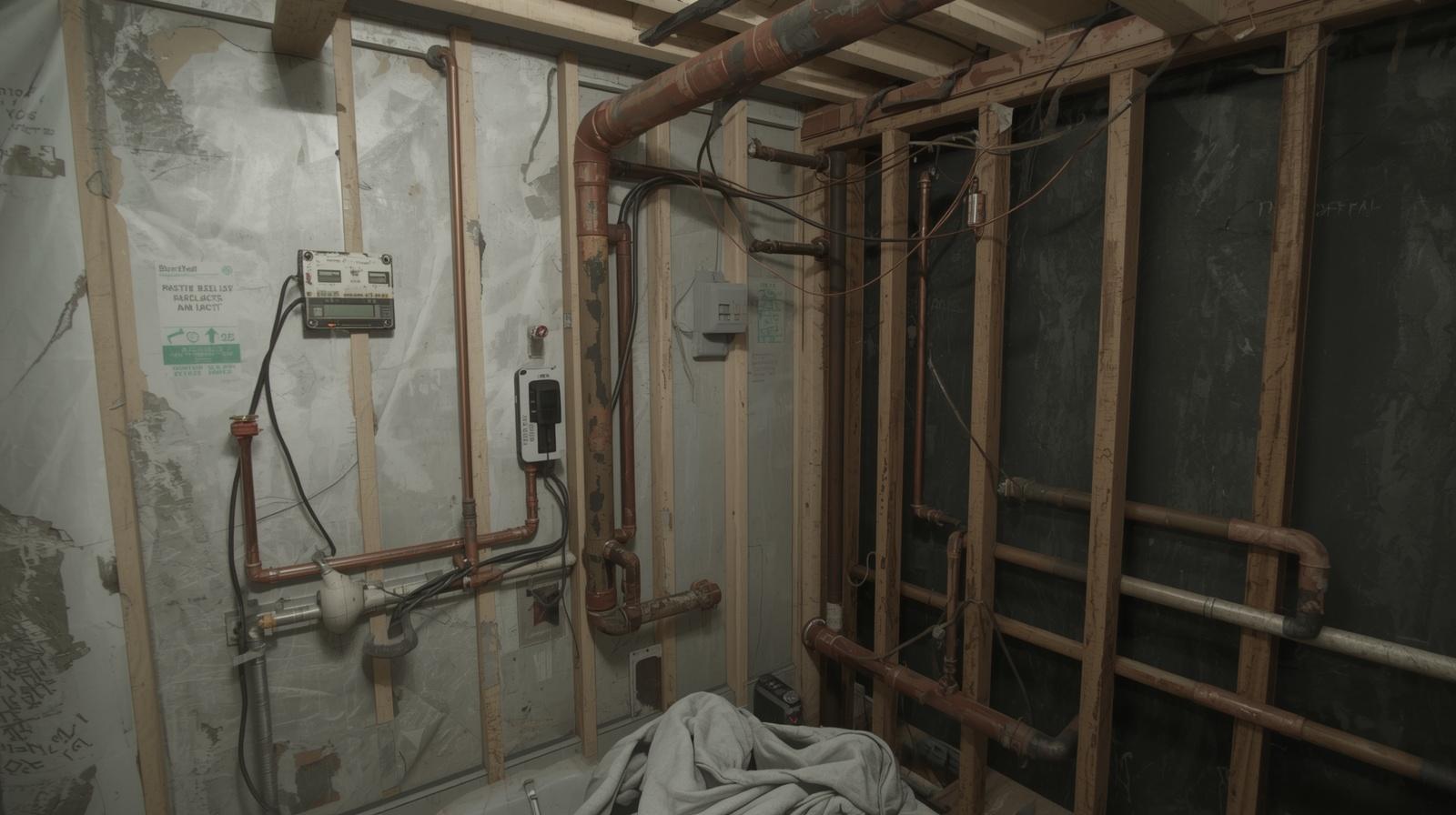
If your bathroom remodel involves any of the following, hiring a professional is the right call:
- Moving or replacing plumbing fixtures
- Any new or modified electrical work
- Shower or tub installation or replacement
- Tile work in wet areas
- Waterproofing of any kind
- Structural modifications
- A project you want completed in weeks, not months
For a full bathroom remodel, the combination of Massachusetts licensing requirements, the technical demands of waterproofing and tile work, and the financial risk of moisture-related mistakes makes professional installation the smarter investment for most homeowners.
What Is the Simpler Path to Your New Bathroom?
At Cove Bath, we handle every aspect of your bathroom remodel from design through construction, including all licensed plumbing, electrical, waterproofing, tile, and fixture installation. Our fixed-price packages at $30K, and $40K tiers mean you know the full cost before we start, with no surprise charges.
We complete most projects in one to two weeks, and our process starts with a simple online quiz that gives you an instant estimate. From there, you can schedule a free virtual consultation to discuss your project in detail.
We serve homeowners across Wellesley, Newton, Brookline, Needham, Natick, and 50-plus communities in Greater Boston. Learn more about our team or browse completed projects in our gallery.