Quartz vs. Granite Bathroom Countertops: A Complete Comparison
When it comes to bathroom vanity countertops, quartz and granite are the two most popular premium options, typically ranging from $100 to $120 per square foot installed. Both look beautiful, last for decades, and add value to your home. But they are fundamentally different materials with different strengths, and the humid bathroom environment makes those differences more relevant than they might be in a kitchen.
This guide compares quartz and granite across the factors that matter most for bathroom countertops so you can choose with confidence.
Frequently Asked Questions
Is quartz or granite better for bathroom countertops?
Quartz is the more practical choice for most bathrooms because it is non-porous and requires no sealing, which matters in a humid, water-exposed environment. Granite is an excellent option if you prefer natural stone and are comfortable with annual resealing.
Does granite need to be sealed in a bathroom?
Yes. Granite is porous and requires sealing approximately once a year in a bathroom setting to prevent water stains, soap absorption, and potential bacteria growth in its pores.
How much more does quartz cost than granite for a bathroom vanity?
Quartz averages around $120 per square foot installed versus $100 for granite. On a typical bathroom vanity countertop of 6 to 12 square feet, the total cost difference is often only about $300. When you factor in annual sealing costs for granite, the lifetime cost of ownership is very close.
Which material adds more resale value?
Both are considered premium upgrades. Quartz has a slight edge in current buyer trends, particularly with younger buyers who value low maintenance. Granite remains a strong choice with broad appeal, especially in traditional home styles.
Can quartz be damaged by bathroom products?
Quartz is non-porous and stain-resistant, so everyday bathroom products will not damage or stain it. It can be damaged by excessive heat, but that is not a concern in a bathroom environment.
What Are the Basics of Quartz vs. Granite?
Granite is a natural stone quarried from the earth and cut into slabs. Each slab is unique, with its own veining, mineral deposits, and color variations. It is one of the hardest natural stones available.
Quartz is an engineered stone made from approximately 90 to 95 percent ground natural quartz crystals combined with polymer resins and pigments. The manufacturing process produces a consistent, non-porous surface that can be designed to mimic natural stone or achieve colors and patterns not found in nature.
The core distinction: granite is natural and porous; quartz is engineered and non-porous. That single difference drives most of the practical considerations for bathroom use.
How Durable Are Quartz and Granite?
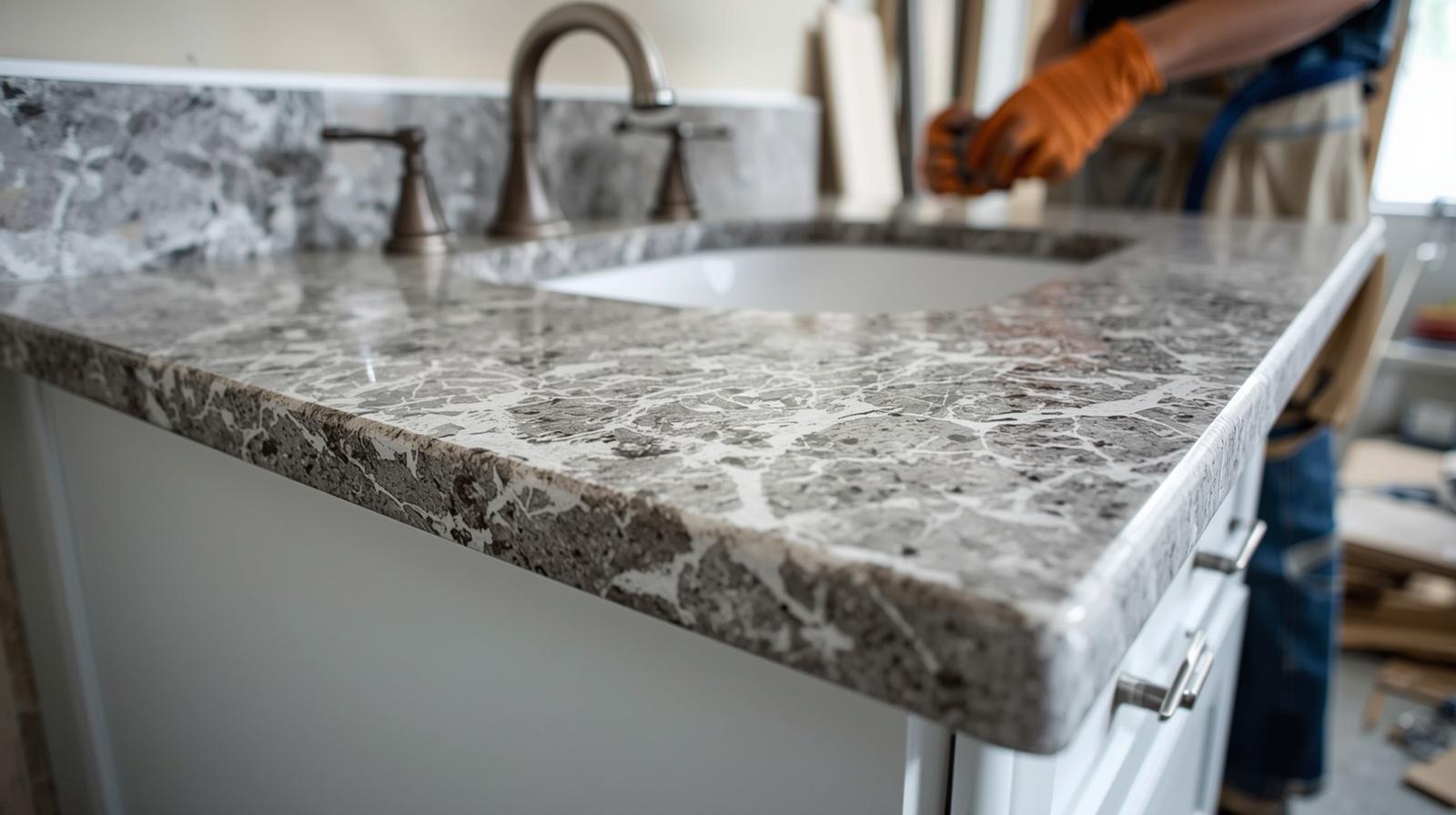
Both materials are extremely durable and will outlast most other components in your bathroom. However, they handle wear differently.
Granite scores a 6 to 7 on the Mohs hardness scale, making it highly resistant to scratching. It can chip if struck sharply on an edge, but in a bathroom setting where impacts are minimal, this is rarely an issue. Granite has been used in high-end bathrooms for decades and holds up well over time.
Quartz is similarly hard and has the added advantage of being more flexible due to its resin content. It is highly resistant to cracking and chipping. Because it is engineered, it does not have the natural fissures or weak points that can occasionally appear in granite.
Winner: Tie. Both materials will last the lifetime of your bathroom. For vanity countertops, durability differences between the two are negligible in practice.
How Does Each Material Handle Maintenance in a Humid Bathroom Environment?
This is where the comparison gets interesting, and where quartz has a clear advantage for bathrooms specifically.
Granite is porous. Even though it is very hard, granite has microscopic pores that can absorb water, soap, and other liquids. In a bathroom, where the countertop is exposed to humidity, water splashes, and personal care products daily, this porosity means granite requires sealing. Most granite countertops need to be resealed once a year to maintain their stain resistance and prevent moisture from penetrating the surface.
If granite is not properly sealed, it can develop water stains, absorb soap residue, and in extreme cases, harbor bacteria in its pores. The maintenance is not difficult, but it is ongoing.
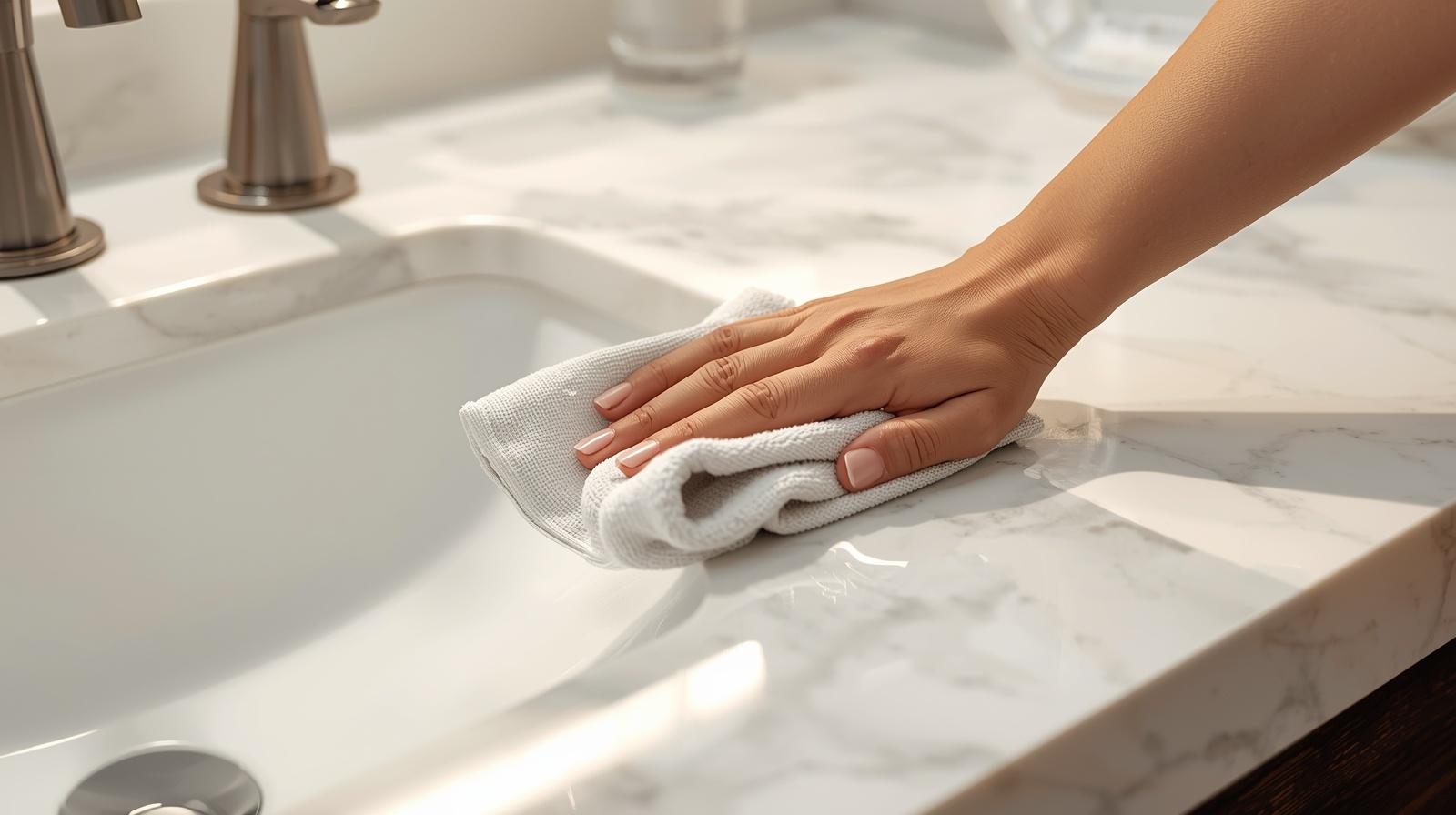
Quartz is non-porous. Because the resin binder fills all the gaps between quartz crystals, the surface has no pores. It does not absorb water, does not need sealing, and does not stain from bathroom products. You clean it with soap and water or a mild household cleaner, and that is the extent of the maintenance.
Winner: Quartz. In a humid bathroom environment where water and moisture are constant, quartz’s zero-maintenance, non-porous surface is a significant practical advantage.
How Do the Costs of Quartz and Granite Compare?
Pricing for both materials overlaps considerably, and the final cost depends on the specific color, pattern, edge profile, and fabrication complexity.
| Material + Installation (per sq ft) | |
|---|---|
| Granite | $100 |
| Quartz | $120 |
For a typical bathroom vanity countertop (roughly 6 to 12 square feet depending on vanity size), the total cost difference between mid-range granite and mid-range quartz is often only $300. At the higher end, premium granite slabs (rare colors and exotic patterns) can actually cost more than quartz.
Bathroom vanity countertops are smaller than kitchen countertops, which compresses the cost difference. The per-square-foot premium of quartz over granite is less impactful when you are covering 8 square feet instead of 40.
Winner: Granite by a small margin on average, but the gap is narrow. When you factor in the lifetime cost of annual sealing products for granite, the total cost of ownership is very close.
How Do the Appearances of Quartz and Granite Differ?
This is largely a matter of personal preference, but each material has distinct characteristics.
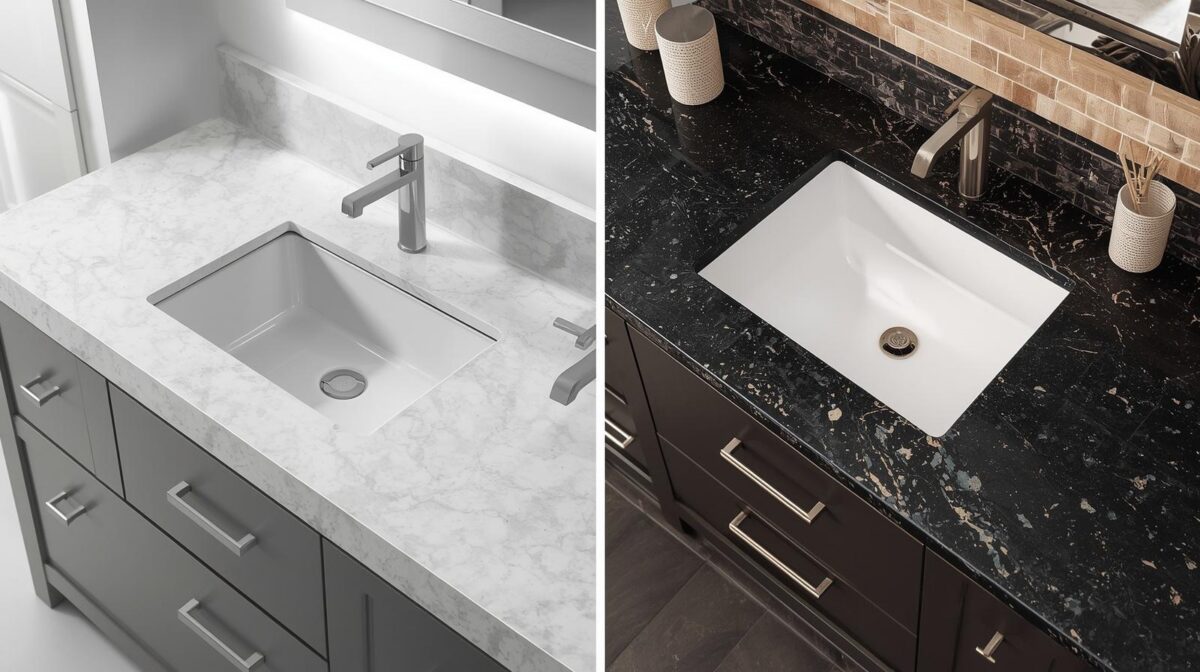
Granite offers the beauty of natural stone. Every slab is one of a kind, with unique veining, flecks, and color movement. If you value the idea that no one else has the exact same countertop, granite delivers that. Popular bathroom colors include whites, grays, blacks, and warm earth tones.
Quartz offers more consistency and design control. Because it is engineered, you can choose from a wide range of colors and patterns, including options that closely replicate the look of marble, concrete, or other natural stones. The pattern is consistent from one end of the slab to the other, which some homeowners prefer and others find less characterful.
Winner: Personal preference. If you want natural uniqueness, choose granite. If you want predictable consistency and a specific look, choose quartz.
Which Is Better for Resale Value?
Both quartz and granite countertops are considered premium upgrades that add value to a home. In the Greater Boston real estate market, buyers expect quality finishes in updated bathrooms, and either material signals a well-done renovation.
That said, quartz has been trending upward in buyer preference in recent years. Its low maintenance appeal and modern aesthetic resonate with younger buyers in particular. Granite remains a strong choice with broad appeal, especially in more traditional home styles common in communities like Wellesley, Lexington, and Weston.
Winner: Slight edge to quartz for current buyer trends, but both are strong.
What Are the Pros and Cons of Each Material?
Quartz
Pros:
- Non-porous, zero sealing required
- Stain-resistant with no maintenance
- Consistent color and pattern
- Wide design range including marble-look options
- Ideal for humid bathroom environments
Cons:
- Higher average upfront cost
- Engineered rather than natural (matters to some buyers)
- Can be damaged by excessive heat (not a bathroom concern)
Granite
Pros:
- Natural stone with unique character
- Extremely hard and scratch-resistant
- Strong resale appeal
- Can be less expensive at entry-level price points
Cons:
- Porous and requires annual sealing
- Can stain if not properly maintained
- Color and pattern vary between slabs (harder to match)
- Slightly higher lifetime maintenance cost
How Should You Make Your Decision?
For bathroom vanity countertops specifically, quartz is the more practical choice for most homeowners. The non-porous surface eliminates the ongoing maintenance that granite requires in a wet environment, and the cost difference on a bathroom-sized countertop is relatively small.
Granite is the right choice if you strongly prefer the look of natural stone and do not mind the annual sealing commitment. It is a proven material that has performed well in bathrooms for generations.
Either way, both materials are excellent investments that will serve your bathroom well for decades. The best choice is the one that matches your priorities.
How Do You Start Planning Your Vanity Upgrade?
At Cove Bath, countertop selection is part of our design process for every vanity installation. Our team helps you compare materials, choose the right option for your bathroom, and see how it coordinates with your overall design.
Check out our fixed-price remodeling packages to see what is included, or browse completed projects in our gallery. To get a personalized estimate, take our quick online quiz or schedule a free virtual consultation.