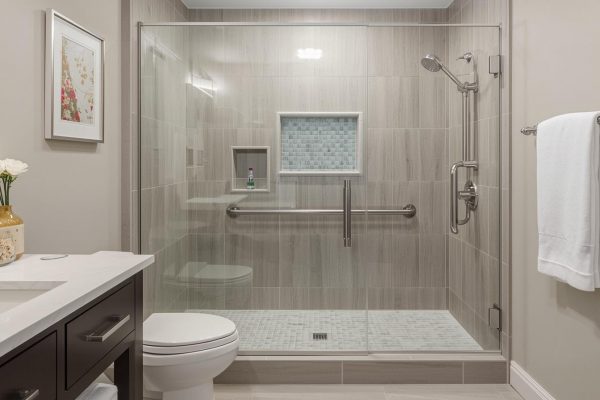
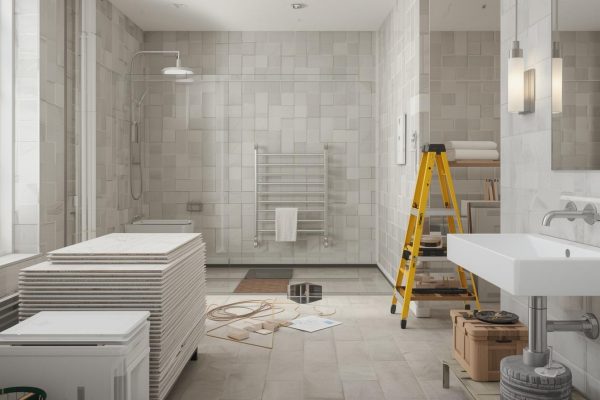
When you remodel a bathroom in the Greater Boston area, the debate over ceramic vs porcelain tile comes up almost every time. Porcelain absorbs under 0.5% water versus ceramic’s 3–7%, making it the stronger performer in wet, high-traffic rooms — especially through a New England winter. Both look great in a showroom and feel similar underfoot, yet they perform very differently where it counts.
We will compare durability, water absorption, cost, slip resistance, and installation. We will also cover which tile works best on floors, shower walls, and shower floors. By the end, you will know exactly what to specify for your project.
Frequently Asked Questions
Is porcelain tile always better than ceramic in a bathroom?
Not always. Porcelain is denser and more water-resistant, which is ideal for floors and shower floors. Ceramic performs well on shower walls and low-traffic areas, often at a lower cost. The smartest choice depends on the specific zone.
What is the real difference in water absorption?
Ceramic absorbs about 3–7% water, while porcelain absorbs under 0.5%. That lower rate makes porcelain more resistant to moisture, staining, and freeze damage. It is the main reason porcelain excels in wet and cold areas.
Does New England weather affect my tile choice?
Yes. Hard freezes can crack water-absorbing tile in cold spaces. Porcelain is freeze-thaw resistant, so it is the safer pick for entry baths, mudrooms, and unheated areas. For fully heated interior bathrooms, both tiles perform well.
Is porcelain harder to install?
Generally, yes. Porcelain is dense and usually needs a wet saw with a diamond blade for clean cuts. It also requires the right thinset for a strong bond. Ceramic is softer and quicker to cut, which can reduce labor time.
Which tile is safer for a slippery shower floor?
Choose a textured or small-format tile with a higher slip rating. Porcelain mosaics are excellent for shower floors because grout lines add grip. Avoid large polished tiles in wet zones, since they can be slick.
Can I use the same tile on my floor and shower walls?
You can, and many homeowners love the seamless look. Just confirm the tile is rated for floor use, with adequate slip resistance underfoot. Mixing a floor-rated porcelain with a coordinating wall tile is also a great option.
What Is the Quick Answer on Ceramic vs Porcelain Tile?
Here is the short version. Porcelain is denser, harder, and absorbs less water. Ceramic is easier to cut, often cheaper, and simpler to install. Both belong to the same family of fired clay tiles. The difference comes down to how they are made.
Porcelain is fired at higher temperatures with a refined clay blend. This creates a tile that is nearly waterproof. Ceramic is fired at lower temperatures and stays a bit more porous. That single fact drives most of the trade-offs you will read about below.
For most Boston-area bathrooms, we recommend porcelain for floors and shower floors. Ceramic remains a smart, budget-friendly pick for shower walls and accent areas. Keep reading to understand why.
How Are Ceramic and Porcelain Tile Made?
Both tiles start as clay, shaped and fired in a kiln. The recipe and heat set them apart.
- Ceramic tile uses red or white clay fired around 1,800–2,000°F. It is lighter and softer. Most ceramic has a glazed top layer for color and water resistance.
- Porcelain tile uses a finer, denser clay fired above 2,200°F. The higher heat vitrifies the tile, making it glass-like and extremely dense.
Because porcelain is denser, its color often runs through the whole body of the tile. That means chips are less noticeable. Glazed ceramic can show a different color underneath if it chips. This matters more on floors than walls.
Why Does Water Absorption Matter Most for Bathrooms?
In a bathroom, water is the enemy. Absorption rate tells you how much moisture a tile soaks up. This is where the ceramic vs porcelain tile comparison really matters.
- Ceramic: roughly 3–7% water absorption.
- Porcelain: less than 0.5% water absorption. This is the official definition of porcelain.
Lower absorption means better resistance to staining, mold, and moisture damage. It also means porcelain handles constant splashing far better. In a shower floor or a bathroom that sees daily steam, that gap adds up over the years.
Ceramic still performs well on walls, where water hits and runs off quickly. The concern is areas of standing water and constant saturation. There, porcelain wins clearly.
What Do PEI Ratings Tell You About Durability and Hardness?
Tile hardness is measured by the PEI scale (Porcelain Enamel Institute). It rates how well a glazed surface resists wear and foot traffic. Higher numbers handle more abuse.
- PEI 1–2: walls only, light or no foot traffic.
- PEI 3: normal residential floors and walls.
- PEI 4–5: heavy traffic, commercial-grade durability.
Porcelain typically rates PEI 4 or 5. Ceramic often lands at PEI 2 or 3. For a bathroom floor that sees daily wear, plus grit tracked in from snowy Boston sidewalks, a higher PEI rating pays off.
| Feature | Ceramic | Porcelain | Winner |
|---|---|---|---|
| Water absorption | 3–7% | Under 0.5% | Porcelain |
| Hardness (PEI) | PEI 2–3 | PEI 4–5 | Porcelain |
| Density | Lower, softer | Higher, harder | Porcelain |
| Cost (installed) | Lower | Higher | Ceramic |
| Ease of cutting | Easy, basic tools | Harder, needs wet saw | Ceramic |
| Chip visibility | Shows base color | Color runs through | Porcelain |
| Freeze-thaw resistance | Limited | Excellent | Porcelain |
| Weight | Lighter | Heavier | Ceramic |
| Design variety | Wide | Very wide | Tie |
How Do Ceramic and Porcelain Tile Compare on Cost?
Budget matters on every remodel. In general, ceramic costs less than porcelain, both for materials and labor.
- Ceramic tile: often the more affordable choice per square foot installed. It is quicker to cut and set, which trims labor time.
- Porcelain tile: usually a bit more per square foot for the tile, plus higher labor because it is harder to cut and heavier to handle.
We avoid quoting fixed dollar figures here, because pricing shifts with tile brand, size, layout, and job complexity. Large-format tiles, intricate patterns, and niche details all affect cost. The honest takeaway: ceramic saves money up front, while porcelain often earns its keep in high-moisture, high-traffic zones.
At Cove Bath, we work with fixed pricing so you know your number before demolition starts. You can compare tile options against a clear budget instead of guessing. See how our process works for a transparent, streamlined path from design to install.
What Should You Know About Slip Resistance and R-Values?
A slippery bathroom floor is a real safety risk, especially for kids and older adults. Slip resistance is often measured by an R-value (R9 through R13) or a DCOF rating. Higher numbers mean more grip.
- R9–R10: suitable for typical dry-to-damp bathroom floors.
- R11–R13: better for wet zones like shower floors and entries.
Both ceramic and porcelain come in a range of finishes. What matters most is the surface texture, not just the material. For shower floors, choose a matte, textured, or small-format tile. Smaller tiles mean more grout lines, which add grip underfoot.
A polished porcelain floor looks stunning but can be slick when wet. A honed or textured version is a safer bet in a family bathroom. We help clients balance looks and safety during design.
How Do New England Winters Affect Your Tile Choice?
This is where local context really shapes the ceramic vs porcelain tile decision. Greater Boston winters bring hard freezes, thaws, and plenty of moisture. Any tile that absorbs water can crack when that water freezes and expands.
Porcelain’s near-zero absorption makes it frost-proof and freeze-thaw resistant. Ceramic is not rated for freezing conditions in most cases. For interior heated bathrooms, freeze-thaw is rarely an issue with either tile.
But think about the whole home. Mudrooms, three-season porches, entry baths, and basement bathrooms can get cold. If a space might dip below freezing, porcelain is the safer specification. The same logic applies to any exterior or transitional tile near a door.
New England humidity also plays a role. Older homes in Newton, Brookline, Wellesley, and Cambridge often lack strong bathroom ventilation. In damp, poorly vented rooms, porcelain’s moisture resistance helps prevent long-term problems behind and beneath the tile.
How Does Installation Difficulty Differ Between Ceramic and Porcelain?
Installation is a practical part of the ceramic vs porcelain tile choice. It affects labor, timeline, and cost.
Cutting and Handling
Ceramic is softer and easier to score and snap. A simple tile cutter often does the job. That speeds up bathroom projects and reduces waste.
Porcelain is much harder. It usually requires a wet saw with a diamond blade for clean cuts. Complex cuts around drains, corners, and fixtures take more time and skill. Porcelain is also heavier, which matters on walls and large formats.
Setting and Bonding
Because porcelain is so dense, it bonds best with a high-quality modified thinset made for porcelain. Skipping the right adhesive leads to failures. This is one reason professional installation matters, especially for large-format tile.
Ceramic is more forgiving with standard thinset. Either way, proper waterproofing behind the tile is essential in showers. The tile is only one layer of a good wet-area system.
Our team handles these details every day across the Greater Boston area. Explore our bathroom remodeling services to see how we manage tile selection, waterproofing, and clean installation.
Which Tile Is Better for Bathroom Floors?
For bathroom floors, we usually recommend porcelain. Floors take the most abuse: foot traffic, dropped items, water, and grit. Porcelain’s hardness and low absorption make it ideal.
That said, a quality ceramic rated PEI 3 can work well in a low-traffic powder room or guest bath. If budget is tight and the room stays dry, ceramic is a reasonable floor choice. Just verify the PEI rating suits floor use.
- Best for busy family bath floors: porcelain.
- Fine for a quiet powder room floor: PEI 3 ceramic.
- Cold or transitional spaces: porcelain, for freeze-thaw safety.
Which Tile Is Better for Shower Walls?
Shower walls are the sweet spot for ceramic. Walls do not carry foot traffic, so PEI hardness matters less. Water hits the wall and drains away quickly, so absorption is less critical than on floors.
Ceramic wall tile is lighter, easier to cut, and often more affordable. It also comes in beautiful glazes, subway shapes, and colors. Many gorgeous Boston-area showers use ceramic on the walls and porcelain on the floor.
Porcelain wall tile still works well, especially for large-format looks and coordinated designs. If you want the same tile running from floor to wall, porcelain gives a seamless result. Both are valid, and the choice often comes down to style and budget.
Which Tile Is Better for Shower Floors?
Shower floors demand the most from any tile. They see constant water, standing moisture, and require strong slip resistance. Porcelain, in a small-format or textured finish, is the clear winner here.
Small mosaic tiles are popular for shower floors because they conform to the slope toward the drain. They also add grout lines for grip. Porcelain mosaics deliver durability, low absorption, and safe footing all at once.
We generally steer clients away from large, polished tiles on shower floors. They can be slippery and harder to slope properly. A textured porcelain mosaic checks every box for safety and longevity.
What Design and Style Options Are Available?
Both tiles offer huge design range. Modern printing technology lets porcelain mimic marble, wood, concrete, and natural stone with striking realism. That means you can get the look of Carrara marble without the maintenance.
Ceramic shines in classic glazes, handmade looks, and colorful accent tiles. For a timeless New England bath, a white ceramic subway wall paired with a porcelain floor is a proven combination. It suits the colonials, Victorians, and capes common across the region.
At Cove Bath, we offer curated design selections. That means you are not lost in a warehouse of thousands of options. We narrow it to beautiful, durable choices that fit your home and budget.
Where Should You Shop for Tile in the Greater Boston Area?
You have plenty of places to see tile in person around Boston. Local tile showrooms and design centers let you feel the texture and view full-size samples under real lighting. Seeing a tile in your hand beats guessing from a small online swatch.
Bring home samples and test them in your actual bathroom light. Morning light in a Wellesley bath differs from evening light in a Boston condo. Lay the sample on the floor and step on it to judge grip and comfort.
If you would rather skip the endless showroom hunt, we can guide you. Our curated approach saves time and prevents costly mistakes. We match tile performance to each zone of your bathroom, from floor to shower.
What Does Maintenance and Longevity Look Like for Each Tile?
Both tiles are easy to clean with simple, non-abrasive products. Porcelain’s density makes it slightly more stain-resistant. Grout, not the tile, is usually the weak point in any bathroom.
Sealing grout and choosing the right grout color help keep your bathroom looking fresh. Epoxy grout resists stains and moisture better than standard grout in wet areas. Ask about grout options during your design planning.
With good installation and basic care, either tile can last decades. That long lifespan is a big reason tile remains the top surface for bathrooms across New England.
So, Which Should You Choose?
Here is our practical summary of the ceramic vs porcelain tile decision for Greater Boston bathrooms:
- Bathroom floors: porcelain for durability and low absorption.
- Shower walls: ceramic for value and easy installation, or porcelain for a seamless look.
- Shower floors: textured porcelain mosaic for safety and moisture resistance.
- Cold or transitional spaces: always porcelain for freeze-thaw protection.
- Tight budget, dry powder room: quality ceramic can work well.
There is no single winner for every situation. The best remodels often use both tiles, each where it performs best. That is the approach we take on every project.
Ready to Plan Your Bathroom Remodel?
Choosing between ceramic and porcelain gets much easier with expert guidance. At Cove Bath, we help Greater Boston homeowners select the right tile for every part of the bathroom. You get fixed pricing, quick timelines, and curated design selections that take the guesswork out of the process.
Let us help you build a beautiful, durable bathroom that stands up to New England living. Contact us today to request a free quote and consultation. We look forward to bringing your project to life.