Spa Bathroom Design: How to Create a Relaxing Retreat
You don’t need a weekend getaway to feel like you’re at a spa — with the right design choices, your bathroom can deliver that same calm, restorative feeling every single morning, starting at around $25,000.
Spa bathroom design has become one of the most requested styles we see at Cove Bath, and for good reason. After years of living with builder-grade bathrooms, homeowners across Greater Boston are ready for something that actually makes them feel good. The best part? You don’t need a massive budget or a month-long renovation to get there.
Here’s how to bring genuine spa energy into your bathroom, whether you’re working with a compact hall bath or a spacious primary suite.
Frequently Asked Questions
Is a spa bathroom realistic at different price points?
Yes — the approach just shifts. At $25K, you’re focusing on the essentials: a clean walk-in shower with a rain showerhead, warm-toned tile in a large format, updated lighting with dimmers, and a simple but elegant vanity. You can absolutely achieve a spa feeling at this tier by being intentional with material selection and keeping the design cohesive. At $40K, you can layer in the premium details: thermostatic valves, body sprays, heated floors, a freestanding soaking tub, frameless glass, and natural stone or premium large-format porcelain. This is where you start to approach a true resort-level experience. Both approaches work. The key is consistency — every element should support the same calm, cohesive vision. Check out our pricing page to see exactly what’s included at each tier.
Where Should You Start With a Spa Bathroom?
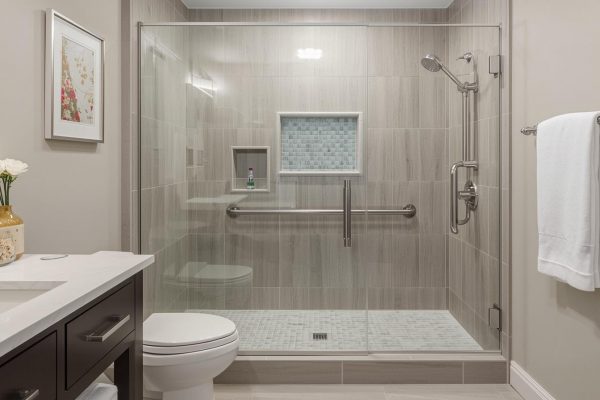
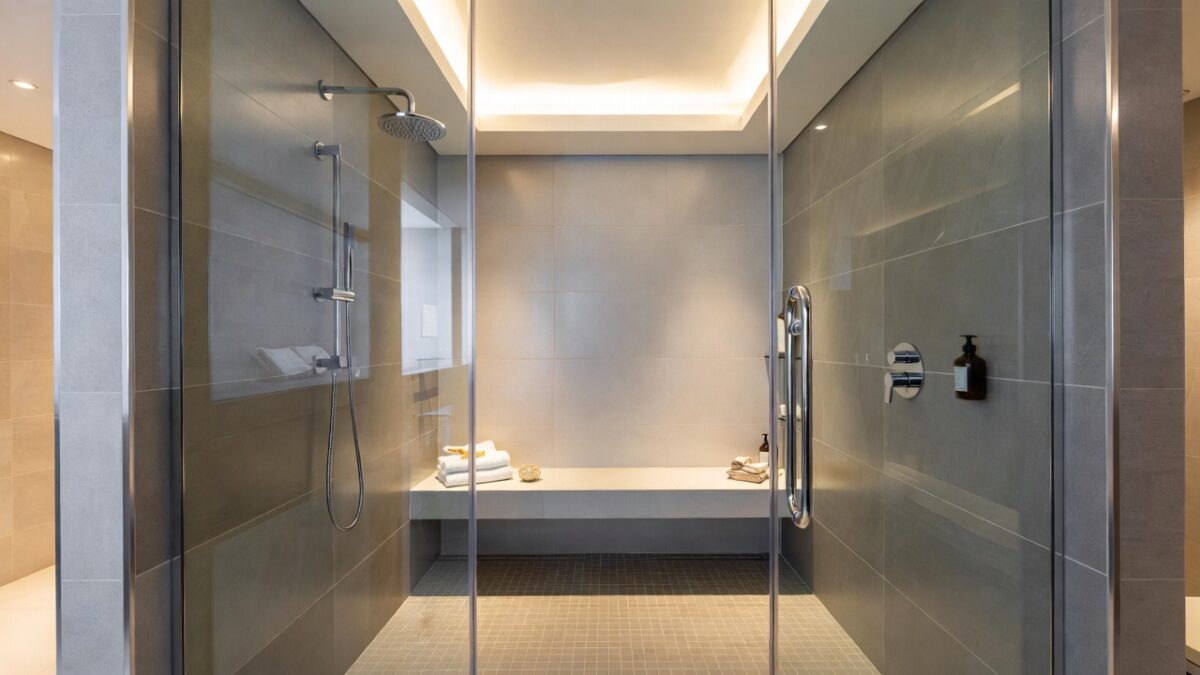
If there’s one element that defines a spa bathroom, it’s the shower experience. A cramped tub-shower combo with a basic showerhead simply cannot deliver the feeling you’re after. That’s why a walk-in shower conversion is almost always the starting point for a spa-inspired remodel.
Walk-in showers give you room to breathe. They eliminate the visual clutter of a shower curtain or framed glass door, and they create the open, airy feeling that’s central to spa design. Add a frameless glass enclosure, and the entire bathroom feels larger and more intentional.
Rain Showerheads Change Everything
A ceiling-mounted or wall-mounted rain showerhead is the single most impactful upgrade you can make for spa feel. The wide, gentle cascade of water is fundamentally different from a standard showerhead — it’s slower, more enveloping, and immediately relaxing.
For the full experience, consider pairing your rain head with a handheld shower on a slide bar. This gives you flexibility for everyday use while keeping that luxurious rain option for when you want to decompress.
Bench Seating Adds Function and Luxury
A built-in shower bench transforms your shower from a quick rinse into a place you actually want to linger. It’s practical too — a spot to shave your legs, set toiletries, or just sit under the warm water for a few extra minutes.
Floating benches with hidden supports look the cleanest and are easiest to keep dry underneath. Teak or stone-look porcelain both work beautifully and hold up to constant moisture.
Body Sprays and Thermostatic Valves
If your budget allows, body sprays mounted at torso height add another layer of hydrotherapy. They’re the kind of detail you’d find at a high-end resort, and they’re more achievable in a home bathroom than most people realize.
Pair any multi-head setup with a thermostatic mixing valve. Unlike standard pressure-balance valves, thermostatic valves let you set a precise temperature that stays consistent regardless of what else is happening in your plumbing. No more flinching when someone flushes a toilet downstairs.
What Materials and Finishes Say “Spa”?
The materials in a spa bathroom should feel organic, tactile, and calm. This isn’t the place for bold patterns or high-contrast combinations.
Natural Stone and Stone-Look Tile
Natural stone — marble, travertine, limestone — is the gold standard for spa bathrooms. But natural stone requires sealing and more maintenance than some homeowners want. That’s where stone-look porcelain comes in. Today’s large-format porcelain tiles replicate the veining and texture of natural stone so convincingly that most people can’t tell the difference, and they’re far more forgiving in a wet environment.
For tile installation in a spa bathroom, consider large-format tiles (24×24 or larger) with minimal grout lines. Fewer grout lines means a cleaner, more seamless look — exactly the uninterrupted visual flow you’d see in a professional spa.
Wood-Look Tile for Warmth
Spa design leans heavily on natural warmth, and nothing delivers that like the look of wood. Obviously, real hardwood in a bathroom is risky. Wood-look porcelain plank tile gives you the visual warmth without the worry. Use it on the floor, or run it up an accent wall for a sauna-inspired feel.
Matte Over Glossy
Matte finishes feel more organic and grounded than glossy ones. This applies to everything — tile, fixtures, countertops, and hardware. Matte surfaces absorb light rather than bouncing it around, which creates a softer, more serene atmosphere.
Choose matte black, brushed nickel, or brushed gold for your fixtures and hardware. Save the chrome for other rooms.
Why Is Lighting the Most Underrated Spa Element?
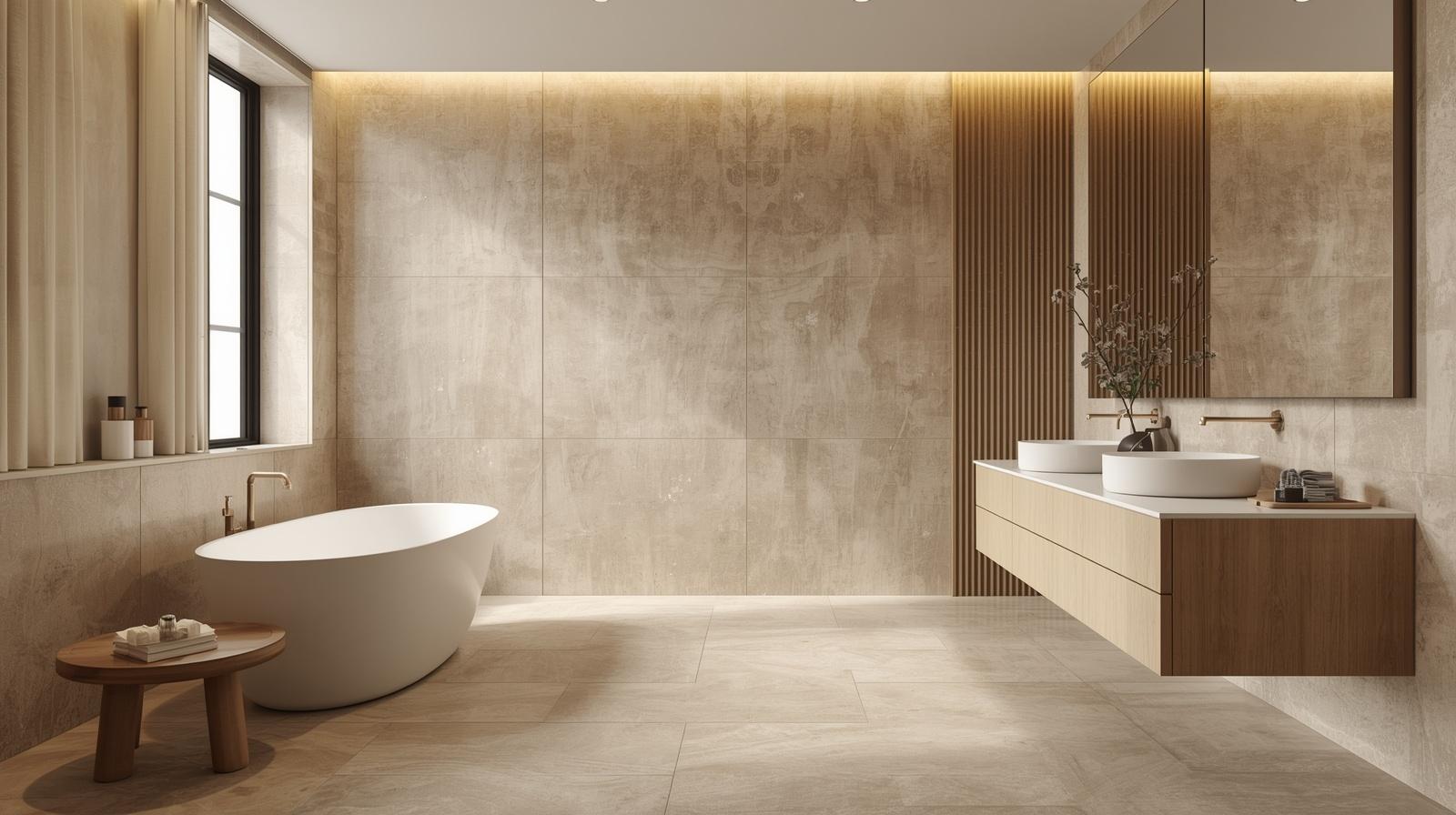
You could install the most beautiful tile and the most luxurious shower in the world, and one harsh overhead light would undo all of it. Bathroom lighting is where spa bathrooms are truly made or broken.
Dimmer Switches Are Non-Negotiable
Every light in a spa-inspired bathroom should be on a dimmer. Full brightness for morning routines, low and warm for an evening wind-down. This single upgrade costs very little relative to its impact.
Warm Color Temperature
Choose bulbs in the 2700K range — warm white. Anything above 3500K starts to feel clinical. Some homeowners go even warmer, to 2400K, for an almost candlelit glow in the evening.
Layered Lighting
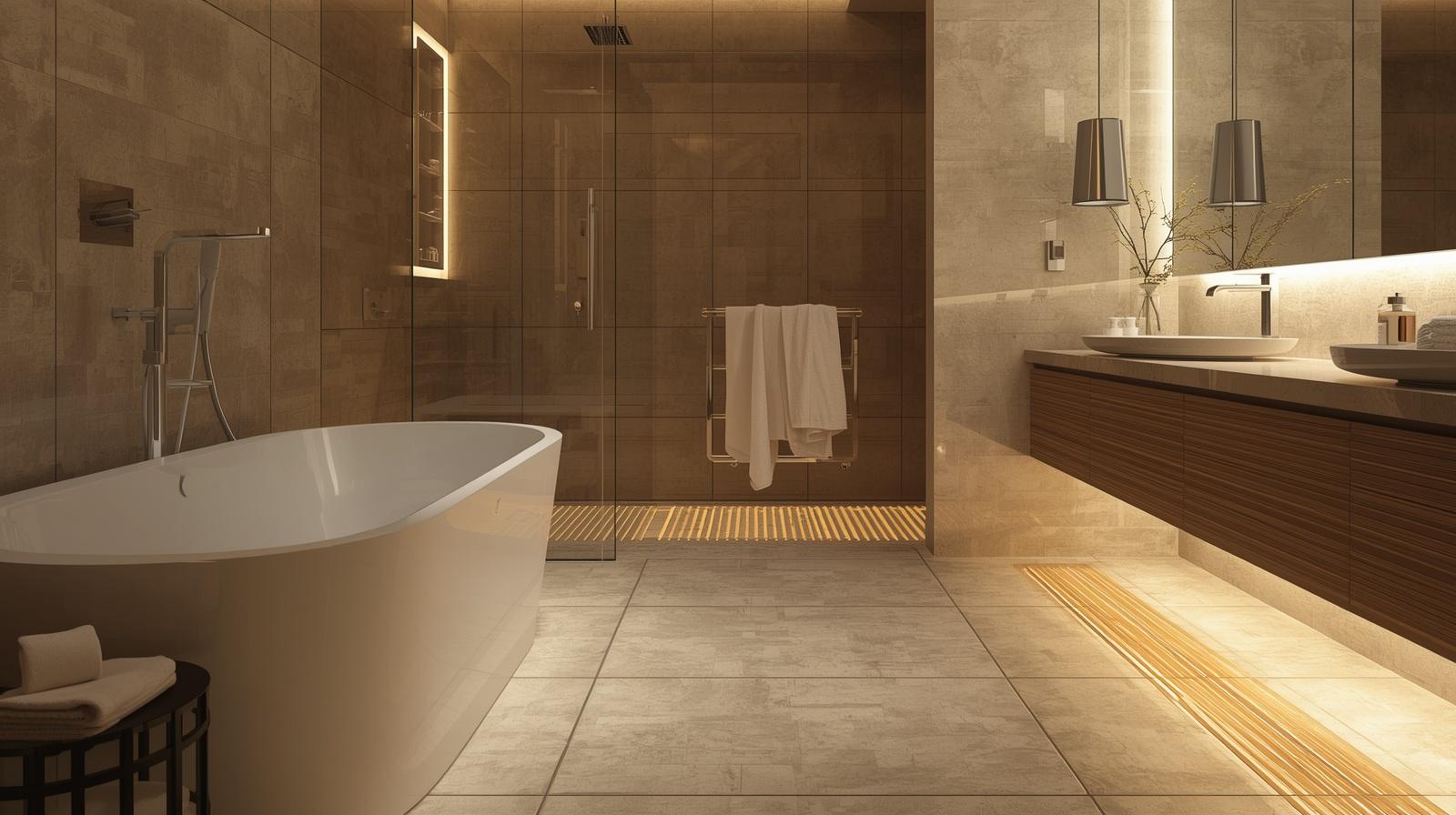
The best spa bathrooms use multiple light sources at different heights: recessed ceiling lights for general illumination, wall sconces flanking the mirror for even face lighting, and perhaps LED strips tucked under a floating vanity or along a niche for subtle accent light. Candle-style sconces with warm-toned glass add a particularly spa-like ambiance.
What Finishing Touches Complete a Spa Bathroom?
Keep the Palette Neutral
Spa bathrooms live in the world of whites, warm grays, greiges, soft taupes, and muted sage greens. These colors recede rather than demand attention, letting you relax without visual stimulation. If you want contrast, introduce it through texture — a rough stone against smooth tile — rather than through competing colors.
Bring in Living Plants
A few well-chosen plants instantly make a bathroom feel more like a retreat. Pothos, ferns, snake plants, and orchids all thrive in bathroom humidity. Place them on open shelving, on the vanity, or in a hanging planter near the window.
Declutter Ruthlessly
Nothing kills spa energy faster than clutter on every surface. Design storage into the remodel — recessed niches in the shower, a vanity with drawers rather than open shelving, a medicine cabinet that actually holds what you need. When surfaces are clear, the room breathes.
What Does a Spa Bathroom Cost at Different Budgets?
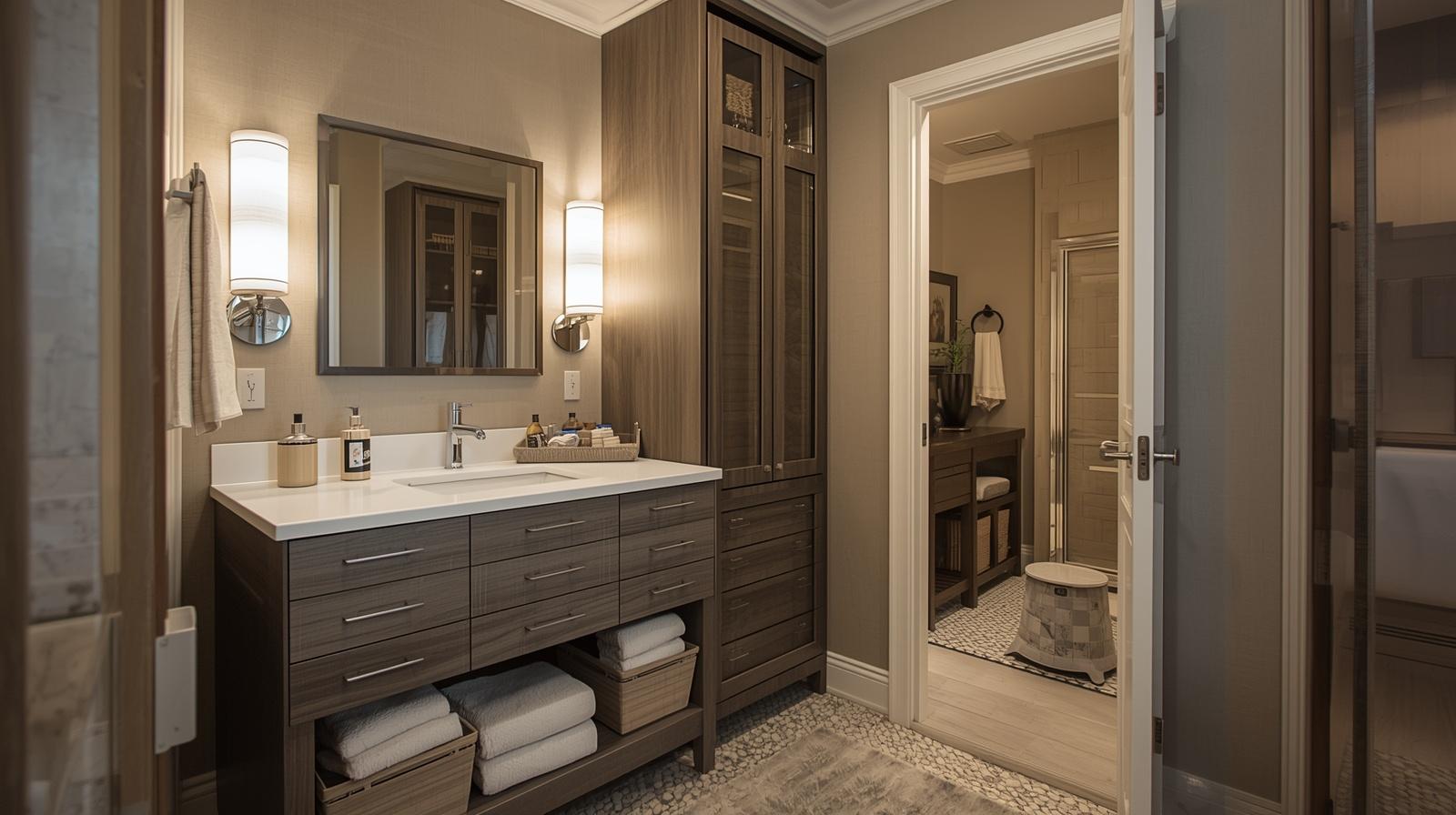
One of the most common questions we hear is whether a spa bathroom is realistic at different price points. The answer is yes — the approach just shifts.
At $25K, you’re focusing on the essentials: a clean walk-in shower with a rain showerhead, warm-toned tile in a large format, updated lighting with dimmers, and a simple but elegant vanity. You can absolutely achieve a spa feeling at this tier by being intentional with material selection and keeping the design cohesive.
At $40K, you can layer in the premium details: thermostatic valves, body sprays, heated floors, a freestanding soaking tub, frameless glass, and natural stone or premium large-format porcelain. This is where you start to approach a true resort-level experience.
Both approaches work. The key is consistency — every element should support the same calm, cohesive vision. Check out our pricing page to see exactly what’s included at each tier.
How Do You Start Planning Your Spa Bathroom?
Creating a spa-like bathroom isn’t about any single product or material. It’s about making deliberate choices that all point in the same direction: calm, warmth, and comfort.
At Cove Bath, we help homeowners across 50+ Greater Boston communities design bathrooms that feel like a daily retreat. Our fixed pricing means no surprises, and our 1-2 week timelines mean you’re enjoying your new space fast.
Ready to see what a spa-inspired remodel would look like in your home? Take our quick online quiz to get your instant quote and start planning your retreat.