Small Bathroom Remodel Ideas in Boston
In Greater Boston, a full small bathroom remodel — including new tile, vanity, toilet, fixtures, lighting, and labor — typically starts at $25,000, with most projects completed in one to two weeks. If you own a colonial in Newton, a triple-decker in Somerville, or a cape in Braintree, you already know the reality: bathrooms in Greater Boston homes tend to be small. Many were built decades ago, when a bathroom was purely functional — a tight five-by-eight room with a pedestal sink, a cast-iron tub, and not much else.
The good news is that a small footprint does not have to mean a cramped, outdated space. With the right design choices, a compact Boston-area bathroom can feel open, modern, and surprisingly luxurious. Below, we walk through the remodel ideas that make the biggest difference in small bathrooms — and explain why they work especially well in the housing stock found across Greater Boston.
Frequently Asked Questions
How much does a small bathroom remodel cost in Greater Boston?
In the Greater Boston market, a full small bathroom remodel — including new tile, vanity, toilet, fixtures, lighting, and labor — typically falls in a well-defined range depending on the scope and finishes you choose. At Cove Bath, we offer fixed-price bathroom remodel packages starting at $25,000, so you know exactly what you are investing before work begins. No surprise change orders, no drawn-out timelines.
How long does a small bathroom remodel take?
Most of our small bathroom remodels are completed in one to two weeks.
Should I replace my tub with a walk-in shower in a small bathroom?
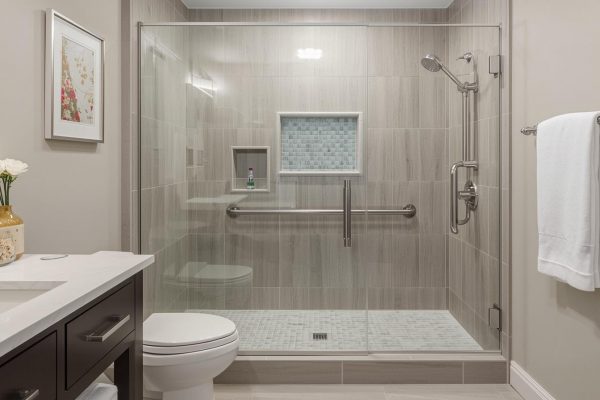
If you have a second full bath in the house, consider replacing the tub with a walk-in shower. A curbless or low-threshold shower with a frameless glass panel eliminates visual barriers and makes the entire floor plane feel continuous. In a typical five-by-eight bathroom, this single change can reclaim several square feet of usable floor space.
What tile makes a small bathroom look bigger?
Larger tiles actually make small rooms feel more spacious. A 12-by-24 or 24-by-24 porcelain tile means fewer grout lines, which reduces visual clutter and creates a cleaner, more continuous surface. Light colors such as white, soft gray, warm greige, and pale blue tones also reflect light and make walls feel like they are receding.
What is the best vanity for a small bathroom?
A wall-mounted floating vanity is one of the most effective upgrades for a small bathroom. By exposing the floor beneath the vanity, you create the visual impression of more square footage. A 24-inch or 30-inch floating vanity with a single deep drawer provides more organized storage than most traditional pedestal sinks or bulky stock cabinets.
Does Your Layout Make the Most of Every Inch?
In a small bathroom, layout is everything. Moving even one fixture a few inches can open up sightlines and make the room feel significantly larger.
Swap the Tub for a Walk-In Shower
Many older Boston homes still have a standard 60-inch alcove tub that dominates the room. If you have a second full bath in the house, consider replacing the tub with a walk-in shower. A curbless or low-threshold shower with a frameless glass panel eliminates visual barriers and makes the entire floor plane feel continuous. In a typical five-by-eight bathroom, this single change can reclaim several square feet of usable floor space.
Consider a Pocket Door or Barn-Style Slider
A standard swing door eats up about nine square feet of clearance when it opens. In the narrow hallways common in triple-deckers and older colonials, a pocket door that slides into the wall — or a wall-mounted barn-style slider — eliminates that wasted arc entirely. It is one of the simplest structural changes you can make, and it has an outsized impact on how a small bathroom functions day to day.
Reposition the Vanity to Open the Entry
When you step into a bathroom and immediately bump into a vanity, the room feels smaller than it is. Repositioning the vanity to a side wall or the far wall creates an open landing zone at the entry. This is a common fix in Boston-area capes, where the upstairs bathroom is often tucked under the roofline with limited floor space near the door.
What Storage Solutions Work Best in Tight Spaces?
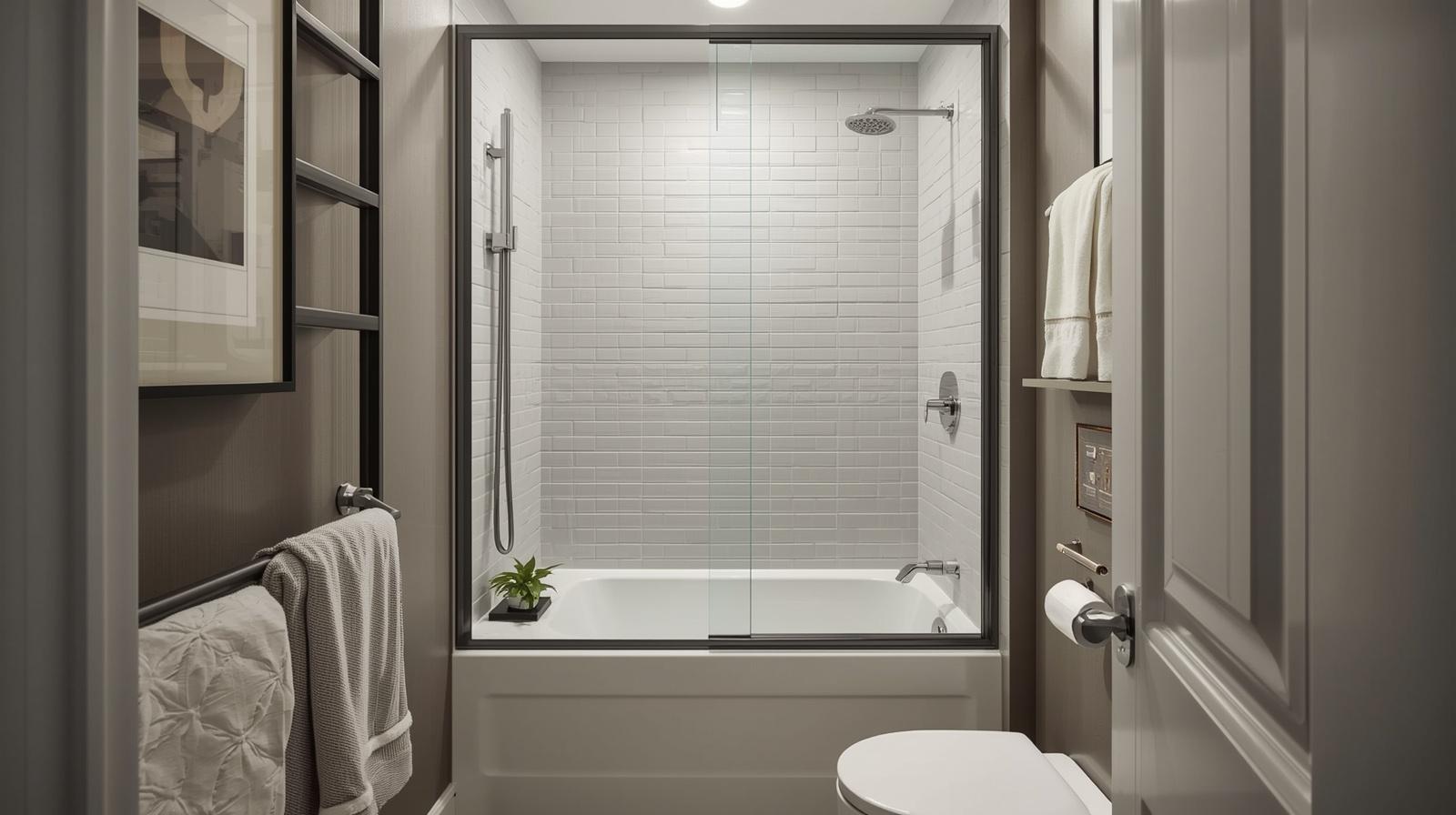
Lack of storage is the number-one complaint we hear from homeowners with small bathrooms. The fix is building storage into the design from the start, rather than adding freestanding pieces after the fact.
Floating Vanities
A wall-mounted floating vanity is one of the most effective upgrades for a small bathroom. By exposing the floor beneath the vanity, you create the visual impression of more square footage. A 24-inch or 30-inch floating vanity with a single deep drawer provides more organized storage than most traditional pedestal sinks or bulky stock cabinets. Pair it with a vessel sink or an integrated countertop basin to maximize usable counter space. Learn about our vanity installation.
Recessed Medicine Cabinets and Niches
In homes with standard 2×4 framed walls, you have roughly three and a half inches of depth between the studs — enough for a recessed medicine cabinet or a built-in shower niche. A recessed cabinet keeps toiletries off the counter without projecting into the room. In the shower, a tiled niche replaces a hanging caddy and gives the space a clean, built-in look. We typically recommend at least one niche per shower, sized to fit standard shampoo bottles upright.
Vertical Storage: Go Up, Not Out
When floor space is limited, use the walls. A narrow open shelf above the toilet, towel hooks instead of a towel bar, or a slim linen tower beside the vanity can dramatically increase storage capacity without shrinking the walkable area. In Victorian-era homes around Boston, where bathrooms sometimes have nine-foot ceilings, tall storage makes especially good use of the vertical space that is already there.
Which Tile Choices Make a Small Room Feel Bigger?
Tile selection has a major influence on how large or small a bathroom feels. The wrong choice can make a compact room feel busy and closed-in. The right choice does the opposite.
Use Large-Format Tiles
It sounds counterintuitive, but larger tiles actually make small rooms feel more spacious. A 12-by-24 or 24-by-24 porcelain tile means fewer grout lines, which reduces visual clutter and creates a cleaner, more continuous surface. Running the same large-format tile from the floor up into the shower keeps the eye moving and avoids the choppy effect of switching materials mid-wall. Explore our tile installation services.
Stick to a Cohesive Palette
Limit your tile selection to two or three complementary materials at most. A common approach that works well: one large-format tile for the floor and shower walls, a coordinating subway or stacked tile for an accent wall or the shower niche, and a simple mosaic for the shower floor where slip resistance matters. This keeps the design interesting without overwhelming a small space.
Light Colors Reflect, Dark Colors Absorb
White, soft gray, warm greige, and pale blue tones reflect light and make walls feel like they are receding. That does not mean you have to go all-white — a matte sage green or a warm taupe can add depth and character while still keeping the room feeling open. If you want a darker accent, use it sparingly: a single feature wall or a dark-tiled shower niche framed by lighter surroundings.
Why Is Lighting the Most Underrated Upgrade?
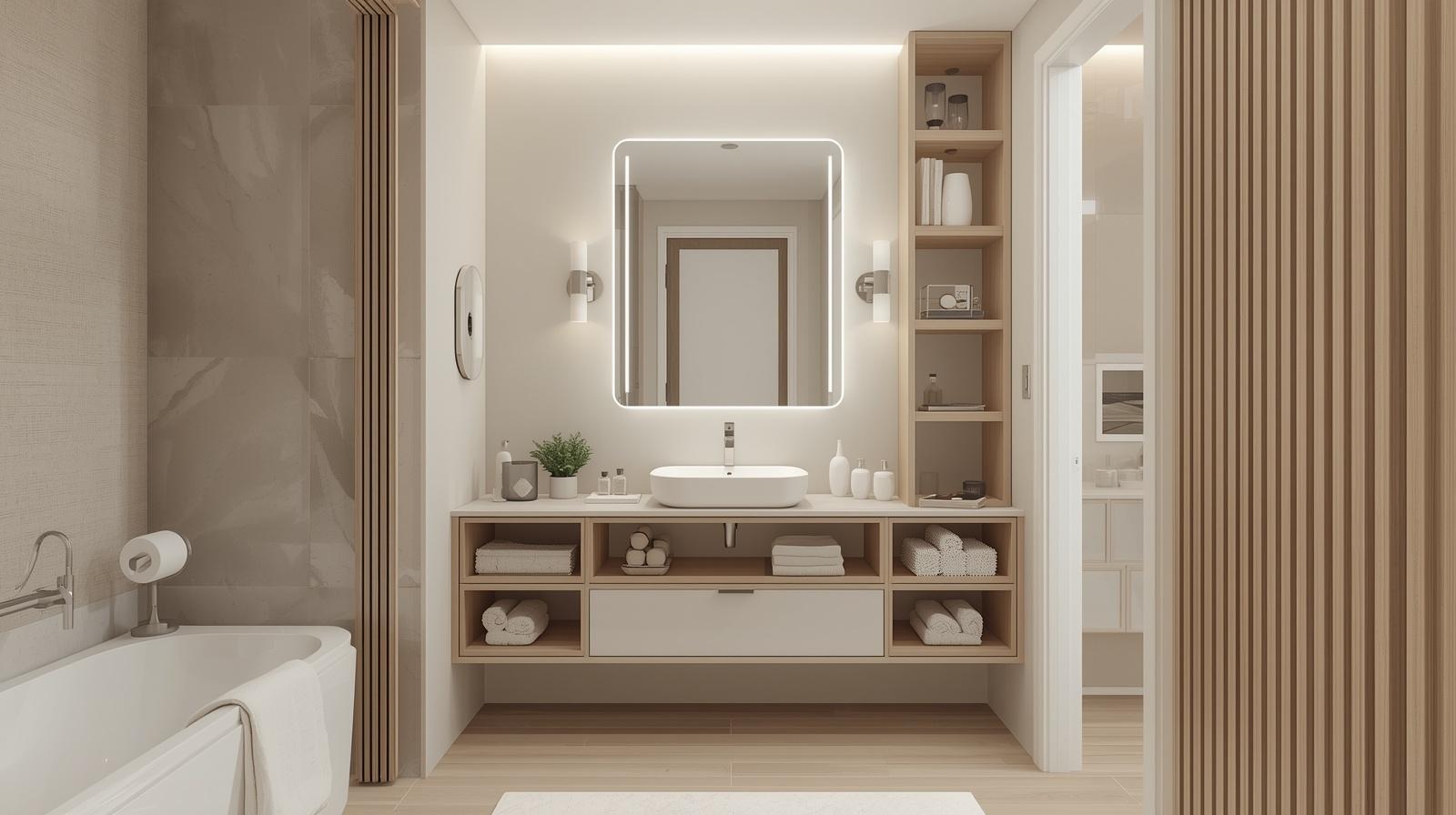
Poor lighting is endemic in older Boston bathrooms. A single overhead fixture with a yellowed dome cover does not do any room favors, and it makes a small bathroom feel like a cave.
Layer Your Light Sources
Aim for at least two layers of light. First, vanity lighting: wall-mounted sconces flanking the mirror at eye level provide even, shadow-free illumination for grooming. Second, overhead ambient light: a flush-mount LED fixture or recessed can lights on a dimmer give you control over the room’s overall brightness. If you are building a walk-in shower, consider adding a dedicated recessed light rated for wet locations inside the shower enclosure. Learn about our lighting services.
Maximize Natural Light
If your bathroom has a window — even a small one — do not block it. A frosted or obscure glass pane provides privacy while letting in daylight, which is the single best way to make any room feel larger. In many colonials and capes around Wellesley, Needham, and Brookline, the bathroom window is a modest double-hung. Keeping the window trim clean and the glass unobstructed makes a measurable difference in how the room feels.
What Fixtures Work Best for Small Spaces?
Choosing the right fixtures is about proportion. Oversized fixtures crowd a small bathroom; appropriately scaled pieces make the room feel intentional and well-designed.
Compact Toilets
A comfort-height elongated toilet with a concealed trapway offers a modern look and is easier to clean than traditional exposed-bolt models. If space is extremely tight, a round-front bowl saves roughly two inches of depth compared to an elongated bowl — a small difference on paper, but noticeable in a room where every inch counts.
Single-Hole Faucets
A single-hole or single-handle faucet takes up less deck space than a widespread three-hole model. On a small vanity top, that extra counter space matters. Matte black, brushed gold, and polished nickel finishes are all popular choices right now and pair well with the neutral tile palettes that work best in compact rooms.
Frameless Glass Shower Enclosures
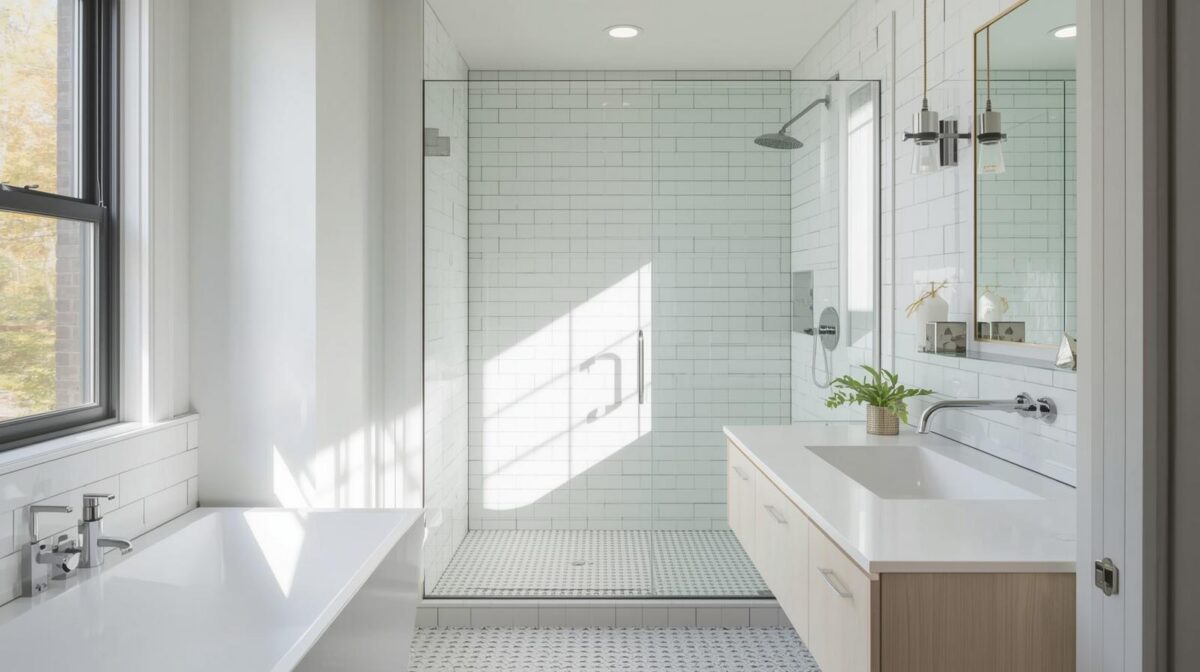
A frameless glass panel or enclosure is one of the best investments in a small bathroom remodel. Unlike a shower curtain or a framed glass door with heavy metal channels, frameless glass virtually disappears, allowing your tile work to take center stage and letting light pass through the entire room uninterrupted. Explore shower installation options.
Which Color Palettes Work Best in Boston Homes?
Boston-area homes have character — exposed brick, original hardwood, craftsman trim. Your bathroom palette should complement what is already there rather than fight against it.
For a classic New England look, consider white subway tile with dark grout, a navy or charcoal painted vanity, and polished nickel fixtures. It is timeless, it pairs well with the woodwork found in most colonials, and it will not feel dated in ten years.
For a modern neutral approach, try large-format warm gray tile, a white oak or walnut floating vanity, and matte black hardware. This style works especially well in updated triple-deckers and condos where the overall aesthetic leans contemporary.
For a soft spa feel, use pale greens or cool whites, natural stone-look porcelain, and brushed gold accents. It brings warmth and calm to a small room without relying on heavy colors that close the space in.
What Does a Small Bathroom Remodel Cost in Greater Boston?
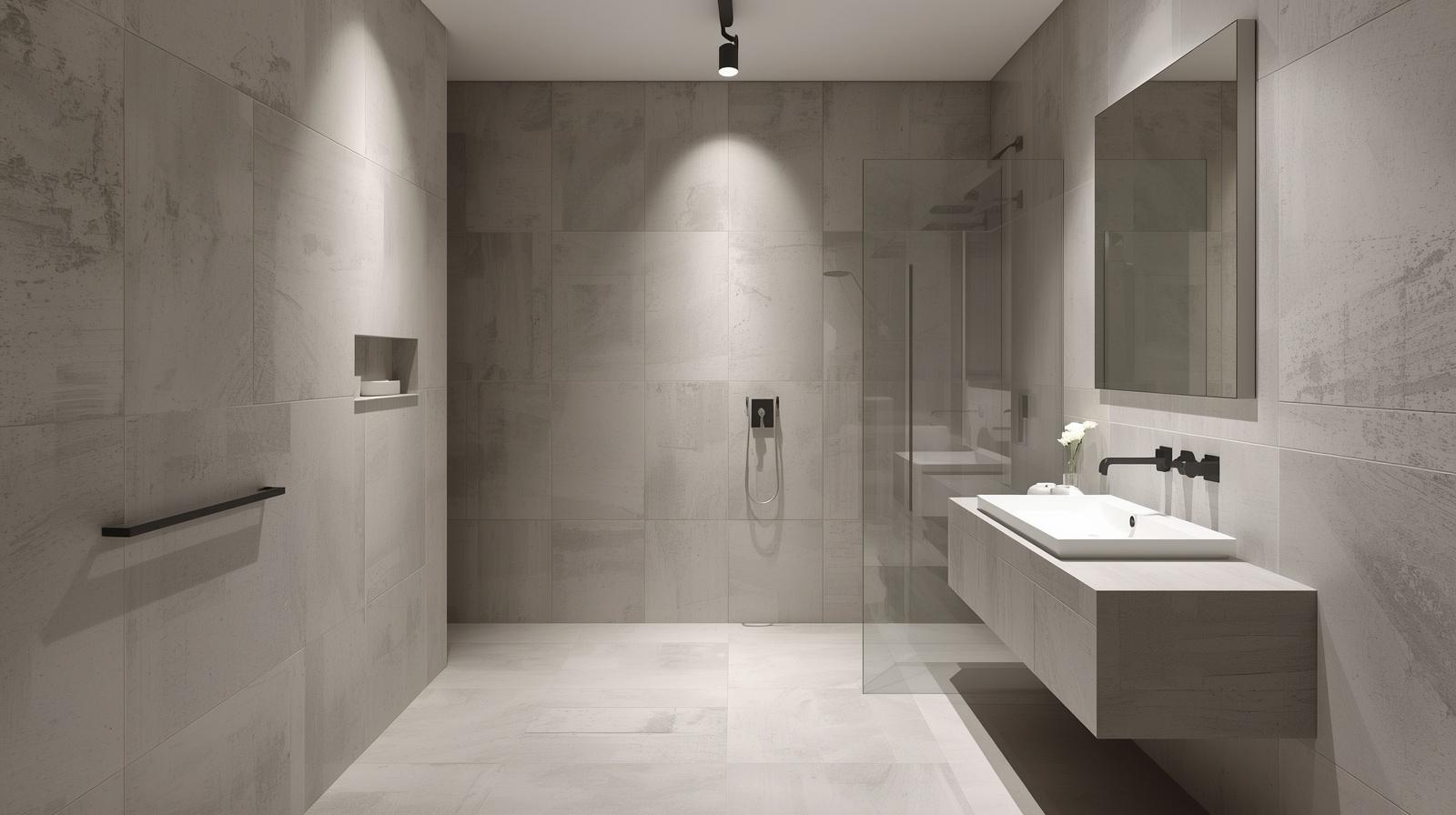
Budget is always part of the conversation. In the Greater Boston market, a full small bathroom remodel — including new tile, vanity, toilet, fixtures, lighting, and labor — typically falls in a well-defined range depending on the scope and finishes you choose. At Cove Bath, we offer fixed-price bathroom remodel packages starting at $25,000, so you know exactly what you are investing before work begins. No surprise change orders, no drawn-out timelines. Most of our small bathroom remodels are completed in one to two weeks.
Ready to Rethink Your Small Bathroom?
A small bathroom is not a limitation — it is an opportunity to be intentional about every detail. The right layout, smart storage, well-chosen tile, and proper lighting can transform even the most cramped five-by-eight room into a space you actually enjoy using every day.
If you are in Wellesley, Newton, Brookline, Needham, or anywhere in the Greater Boston area and thinking about a bathroom remodel, we would love to talk through your options. Schedule a free consultation with Cove Bath today and let us show you what is possible in your home.
Cove Bath is a bathroom remodeling contractor based in Wellesley, MA, serving homeowners across Greater Boston. We specialize in full bathroom remodels with fixed pricing and fast timelines. Learn more about how we work.