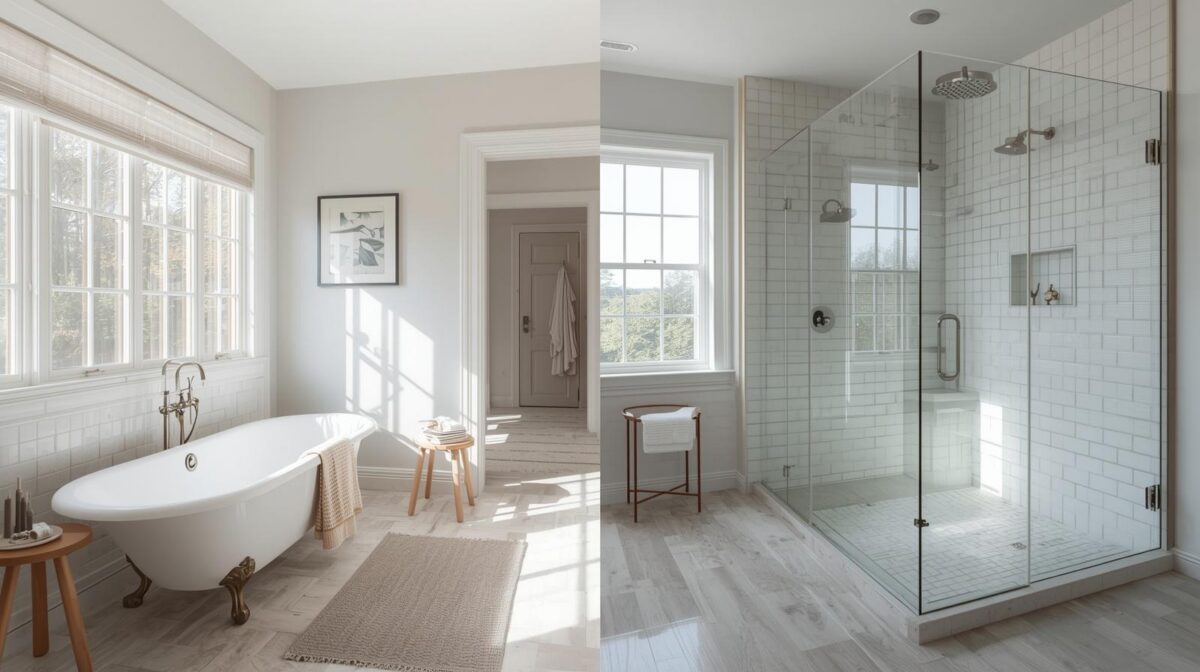
If you are planning a bathroom remodel in the Greater Boston area, one of the first decisions you will face is whether to keep a bathtub or switch to a walk-in shower. It is not a trivial choice. The answer affects your daily routine, your home’s resale value, and how well your bathroom functions for years to come.
Boston-area homes come with their own quirks — small footprints, older plumbing, and a real estate market that has strong opinions about what buyers want. This guide breaks down the pros, cons, and practical tradeoffs so you can make a confident decision.
Frequently Asked Questions
Is this the only full bathroom in the house?
If yes, lean toward keeping a tub unless accessibility is your top priority.
Who uses this bathroom daily?
If the answer is adults only, a walk-in shower will likely serve you better. If young children use it, a tub earns its keep.
How long do you plan to stay?
If you are remodeling for the next 15 to 20 years, prioritize your own comfort and accessibility needs. If you are remodeling to sell within five years, prioritize what buyers expect.
What Is the Case for Keeping a Bathtub?
Resale Value Protection
Real estate agents in Greater Boston consistently advise homeowners to keep at least one bathtub in the house. Families with young children consider it a necessity, and appraisers may note its absence. If your home has only one full bathroom, removing the tub can narrow your buyer pool when it comes time to sell.
In competitive markets like Wellesley, Brookline, and Newton, buyers expect a tub in at least the primary or family bathroom. Removing every tub from a three-bedroom home is a risk most listing agents would flag.
Bathing Comfort and Relaxation
A bathtub offers something a shower simply cannot: the ability to soak. For people who deal with sore muscles, stress, or chronic pain, a hot bath is more than a luxury. Soaking tubs, while requiring more space, have become a popular upgrade in primary bathrooms across the Boston suburbs.
Kid-Friendly Functionality
Bathing young children in a shower is awkward at best. A standard tub with a handheld showerhead gives parents flexibility — baths for toddlers now, showers for teenagers later.
Drawbacks of Bathtubs
- Space requirements. A standard alcove tub takes up roughly 30 square feet of floor space. In the smaller bathrooms common to Boston’s colonial and Cape Cod homes, that footprint is significant.
- Accessibility concerns. Stepping over a tub wall becomes harder with age or limited mobility. This is a growing consideration as more Boston homeowners plan to age in place.
- Cleaning and maintenance. Tubs accumulate soap scum and require regular cleaning around caulk lines and grout. Standing water can lead to mildew in humid New England bathrooms.
What Is the Case for a Walk-In Shower?
Space Efficiency
A walk-in shower can be designed to fit the exact dimensions of your bathroom. In the tight layouts common to homes built before 1960 — which describes a large share of housing stock in towns like Wellesley, Needham, and Natick — a shower can make a cramped bathroom feel significantly more open.
Removing a tub and replacing it with a curbless or low-threshold shower can visually double the perceived size of a small bathroom. Glass enclosures amplify this effect.
Accessibility and Aging in Place
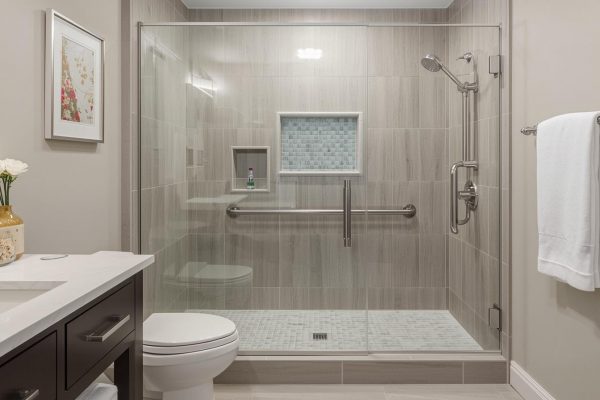
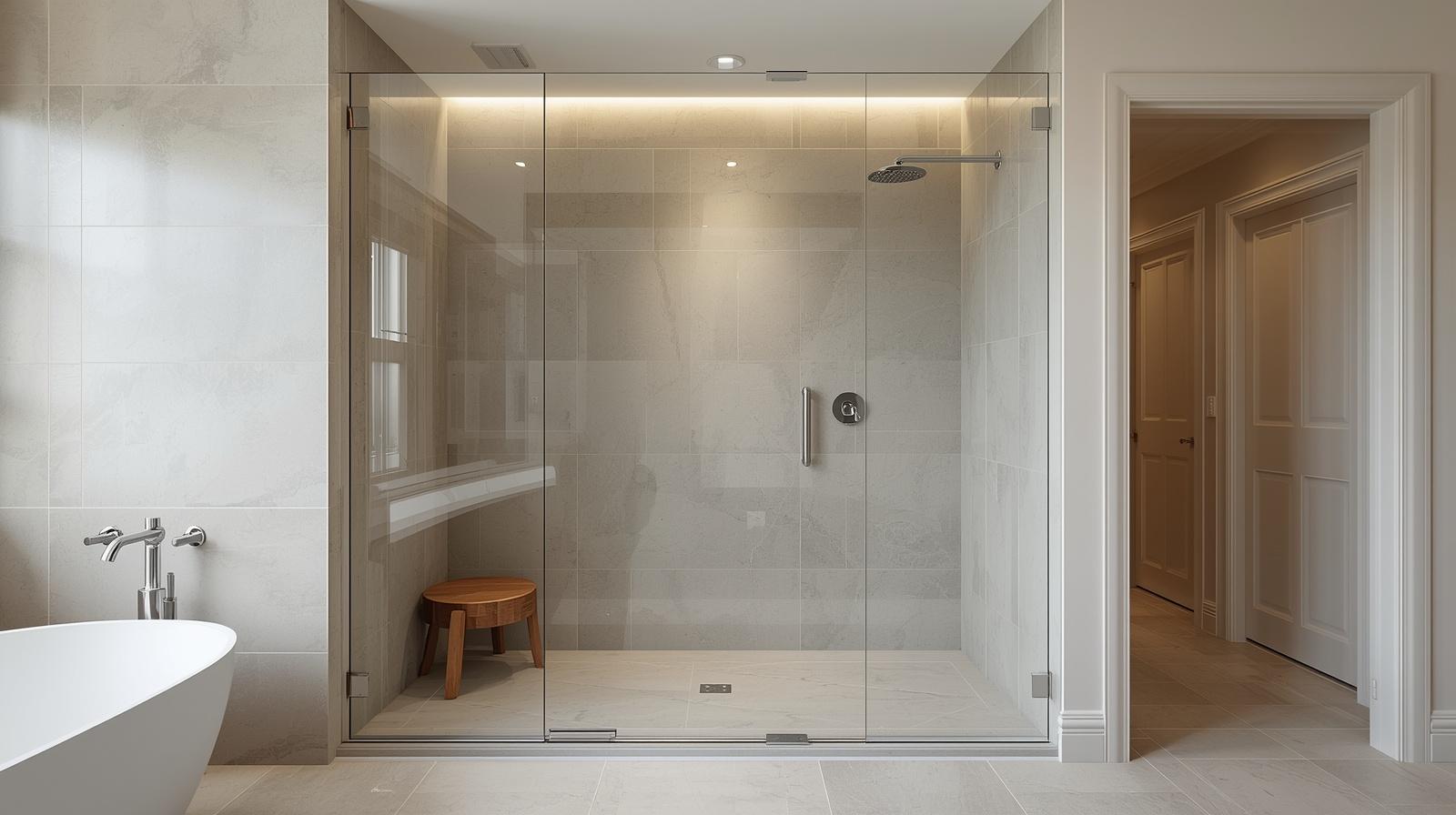
Walk-in showers are the foundation of accessible bathroom design. A zero-threshold entry, grab bars, a built-in bench, and a handheld showerhead create a bathroom that works for all ages and ability levels. Massachusetts has seen a sharp increase in aging-in-place renovations, and the walk-in shower is usually the centerpiece.
If you plan to stay in your home long-term, a well-designed walk-in shower is one of the most practical investments you can make. Learn about our shower installation services.
Modern Aesthetic
Walk-in showers with large-format tile, frameless glass, and linear drains have become the standard in contemporary bathroom design. They photograph well, feel current, and appeal to a broad range of buyers who prioritize a clean, spa-like look.
Drawbacks of Walk-In Showers
- No soaking option. A shower is functional, but it does not replace the experience of a bath.
- Potential resale concerns. If you remove the only tub in the home, some buyers — especially families — may hesitate.
- Water containment. Open or semi-open shower designs require careful planning around drainage and splash zones. Poor execution leads to water on the bathroom floor.
What Boston-Specific Factors Should You Consider?
Older Homes and Plumbing
Many homes in the Greater Boston suburbs were built with cast iron or galvanized steel plumbing. Converting from a tub to a shower (or vice versa) may require moving drain lines or updating supply pipes. This is not a reason to avoid the project, but it is a reason to work with a contractor who understands older New England construction. Learn about our process.
Small Bathroom Footprints
A full bathroom in a 1940s colonial might measure 5 by 8 feet. In that space, choosing between a tub and a shower is really a question about what you are willing to give up. A shower opens floor space for a larger vanity or better storage. A tub preserves functionality for families.
The Two-Bathroom Rule
If your home has two or more full bathrooms, the decision becomes easier. Keep a tub in one — typically the hall or family bathroom — and convert the other to a walk-in shower. This gives you the best of both worlds and protects resale value.
Energy and Water Use
Walk-in showers generally use less water than filling a bathtub, which can matter in communities with tiered water rates. A low-flow showerhead uses roughly 2 gallons per minute; a standard bath uses 30 to 50 gallons.
How Do Bathtubs and Walk-In Showers Compare Side by Side?
| Factor | Bathtub | Walk-In Shower |
|---|---|---|
| Best for families with young kids | Yes | No |
| Best for aging in place | No | Yes |
| Space efficiency | Lower | Higher |
| Resale value (only bathroom) | Safer | Riskier |
| Resale value (second bathroom) | Neutral | Positive |
| Daily convenience | Moderate | High |
| Accessibility | Lower | Higher |
| Cleaning and maintenance | More effort | Less effort |
| Relaxation and soaking | Yes | No |
| Modern aesthetic appeal | Moderate | High |
How Do You Decide Between a Bathtub and a Walk-In Shower?
Ask yourself three questions:
- Is this the only full bathroom in the house? If yes, lean toward keeping a tub unless accessibility is your top priority.
- Who uses this bathroom daily? If the answer is adults only, a walk-in shower will likely serve you better. If young children use it, a tub earns its keep.
- How long do you plan to stay? If you are remodeling for the next 15 to 20 years, prioritize your own comfort and accessibility needs. If you are remodeling to sell within five years, prioritize what buyers expect.
What Is a Third Option: Tub-Shower Combos and Wet Rooms?
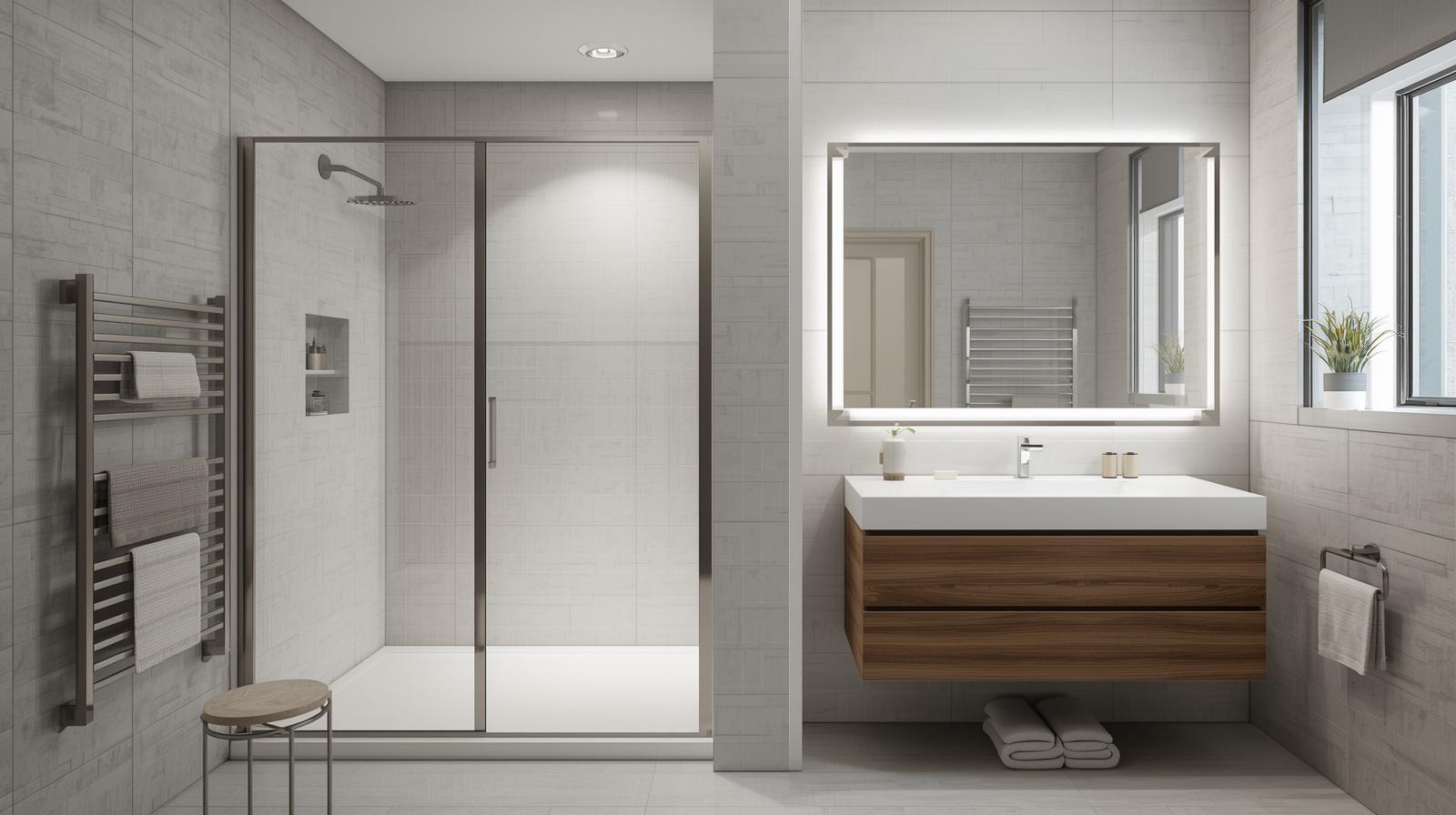
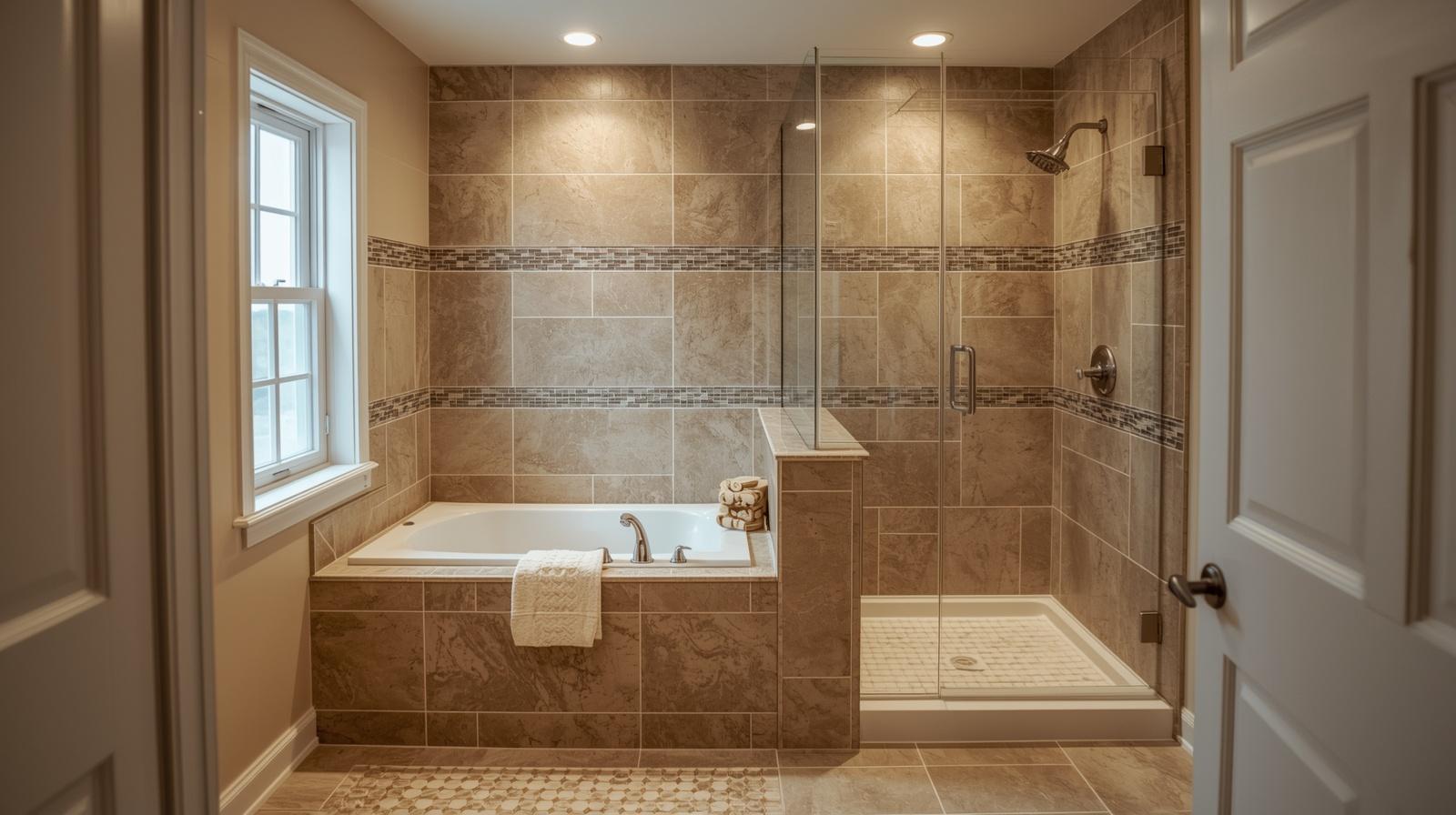
If you cannot decide, a tub-shower combination preserves both functions in a single footprint. It is not as elegant as a dedicated walk-in shower or a standalone soaking tub, but it is the most practical solution for a single-bathroom home.
For homeowners with more space, a wet room — where the entire bathroom is waterproofed and the shower area flows into the rest of the room — offers a European-inspired alternative that works well in both compact and larger layouts. Explore bathtub replacement options.
How Do You Get a Clear Answer for Your Bathroom?
Not sure which direction makes sense for your home? Cove Bath offers virtual consultations where we review your space, discuss your goals, and give you a fixed price — no surprises, no guesswork. Take our online quiz to get an instant quote and see what your remodel could look like.
Take the 2-Minute Quiz for Your Instant Quote
Cove Bath is a bathroom remodeling contractor based in Wellesley, MA, serving homeowners across Greater Boston. We offer fixed-price bathroom renovations with virtual consultations and one-to-two-week project timelines.